Custom microbial blend manufacturing is the contract production of beneficial-microbe inoculants to a buyer's specification, covering strain selection, CFU concentration, carrier format, packaging, and labeling. Distributors and private-label brands use custom blending to launch their own microbial product lines without operating a fermentation facility. The decision involves trade-offs in strain selection, format, regulatory positioning, packaging, and supply-chain logistics. This article is a buyer's guide written for distributors, formulators, OEM customers, and private-label brands.
When a distributor, formulator, or private-label brand decides to launch a microbial product line, the choice is rarely whether to manufacture it in-house. Fermentation infrastructure, regulatory expertise, and strain-bank management are capital-intensive and slow to scale. The real decision is which manufacturing partner to work with, what to spec, and how to structure the supply relationship for the long term.
This article is a practical buyer's guide to custom microbial blend manufacturing. Whether the goal is a private-label biofertilizer, an OEM microbial inoculant, a contract-manufactured custom blend, or a fully branded soil-microbe product line, the manufacturing infrastructure decision typically lands the same way. The guide covers what custom blending actually involves, why most agricultural microbial products on the market are made by a small group of fermentation specialists rather than the brands that sell them, and the specific decisions buyers face when designing a blend: strain selection, CFU concentration, carrier and format, packaging, labeling, regulatory positioning, and supply-chain logistics.
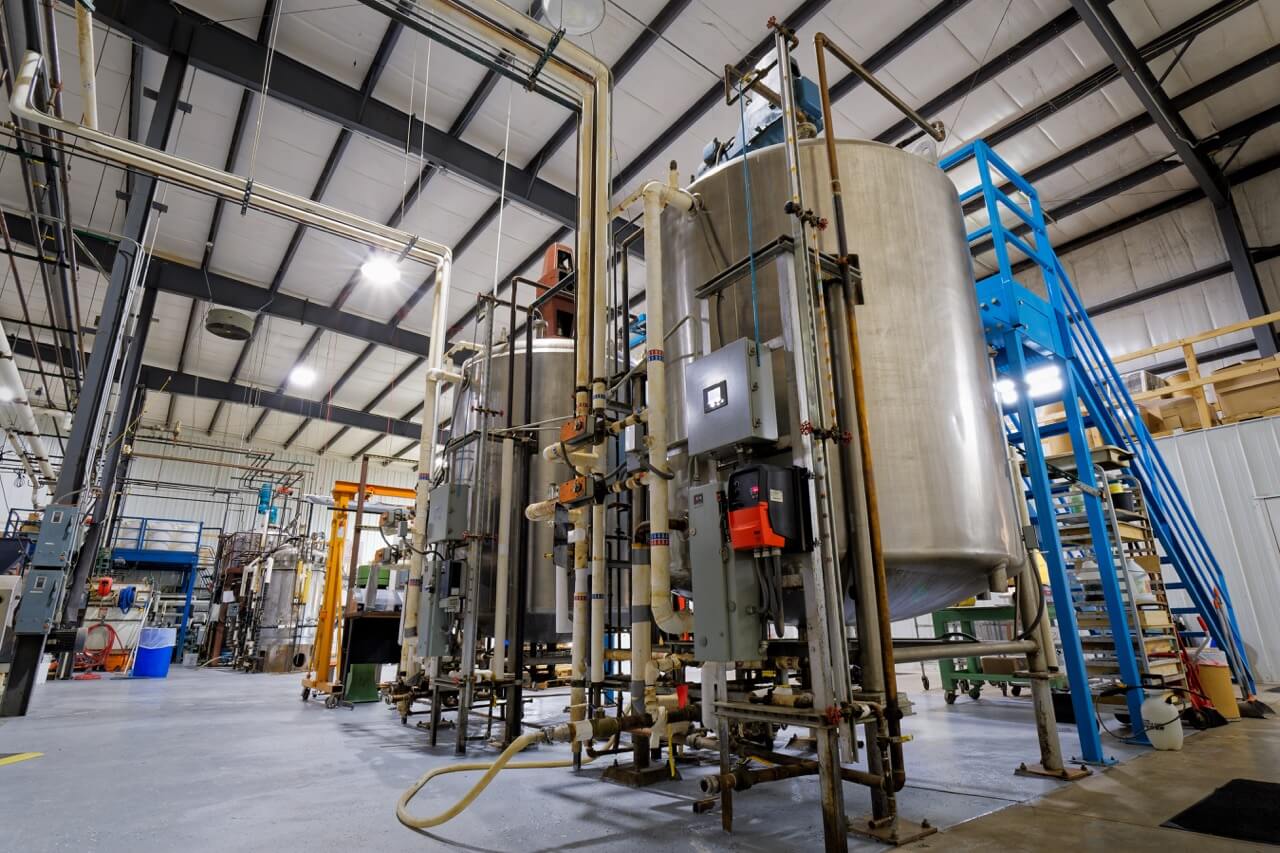
It is written from the manufacturer's side. Applied Biotech Industries has supplied single-strain microbial inoculants and custom blends from our Wisconsin fermentation facility for over two decades, serving distributors, ag retailers, OEM customers, and private-label brands in over 40 countries. The patterns in this guide come from doing this work, not from theorizing about it.
Who this guide is for. Agricultural distributors, fertilizer companies, biostimulant brands, ag retailers, OEM suppliers, contract-manufacturing buyers, and private-label brands that want to launch or expand a microbial product line without operating their own fermentation facility.
1. What custom microbial blend manufacturing means
Custom microbial blend manufacturing is the contract production of beneficial-microbe inoculants to a buyer's specification. The buyer defines what the product should be: which strains, at what colony-forming-unit (CFU) concentration, in which carrier or format, with what packaging, under whose brand. The manufacturer executes that specification, producing the finished product to spec, batch by batch, with documentation.
It differs from off-the-shelf microbial product purchase in three ways. First, the formulation is buyer-controlled rather than manufacturer-controlled, meaning the buyer can target specific agronomic functions or market positioning that no off-the-shelf product matches. Second, the product carries the buyer's brand and labeling rather than the manufacturer's, which matters for distributors building their own market presence. Third, the supply relationship is structured around recurring production rather than one-off purchases, which means pricing, lead times, and quality standards are negotiated upfront rather than transaction-by-transaction.
| Factor | Off-the-shelf microbial product | Custom microbial blend |
|---|---|---|
| Brand control | Manufacturer's brand | Buyer-controlled |
| Strain selection | Fixed by manufacturer | Specified by buyer |
| CFU concentration | Fixed | Buyer-specified |
| Carrier and packaging | Standard | Buyer-specified within ABI's standard options |
| Supply relationship | Transactional | Recurring, forecasted |
| Best fit for | Small buyers, single-product testing | Distributors, OEMs, private-label brands, ongoing supply |
Custom blending is the standard model for many microbial product lines sold under distributor, retailer, and private-label brands. Most distributors, formulators, and ag-retailer private labels do not operate fermentation facilities. Microbial fermentation is capital-intensive, technically complex, regulated, and slow to scale. Outsourcing the production while controlling the product specification gives the buyer commercial control without the capital expenditure.
For a deeper foundation on what beneficial soil microbes actually do and how they're characterized, see the pillar article on how beneficial soil microbes work. The rest of this guide assumes the reader already understands the basic categories of beneficial microbes used in agriculture.
2. Why distributors private-label rather than build their own production
The economics of microbial product manufacturing favor specialization. A single industrial-scale fermenter, the supporting downstream processing equipment, strain bank management, quality control instrumentation, and the trained microbiologists required to run them all represent millions of dollars in capital investment and years of operational learning. Below a certain volume, the unit economics simply do not pencil out for a buyer who is primarily a marketer, distributor, or formulator rather than a fermentation specialist.
Three factors push distributors toward private-label sourcing.
Capital intensity. A modest commercial fermentation facility runs into seven figures of capital expenditure for equipment alone, before factoring in the building, utilities, regulatory permits, and working capital. Even at high utilization, the payback period stretches into years. For a distributor whose core competency is reaching growers and ag retailers, capital is better spent on marketing, sales force, and inventory than on fermenters.
Technical depth. Industrial microbial production is not a single skill. It involves microbiology (strain selection, characterization, contamination management), fermentation engineering (bioreactor operation, media development, scale-up), downstream processing (concentration, stabilization, drying), formulation chemistry (carrier selection, blend compatibility, shelf-life optimization), and quality assurance (analytical methods, batch release, regulatory documentation). A specialist manufacturer has all of those competencies in one operation; a distributor would need to hire and retain them separately.
Speed to market. ABI maintains a menu of more than two dozen production-ready bacterial and fungal strains, blended on demand. For buyers selecting from our existing strain library, we can typically pull strains from inventory, custom-blend, run quality control, and package finished product in 15 business days or less. That speed is only possible because the strains are already fermented, characterized, and held in production-ready stock. Custom fermentation of buyer-proprietary strains is a different process entirely and substantially slower; for the great majority of distributors and private-label brands, the right starting point is a blend designed from our existing library, where the unit economics, lead times, and quality are all already proven.
The trade-off is brand control versus supply control. With private-label manufacturing, the distributor owns the brand, the customer relationship, and the product positioning, while the manufacturer owns the production capacity and the technical execution. For most distributors, that trade is favorable. For a small number of large agricultural input companies, vertical integration into production makes strategic sense, but the math is genuinely different for them.
3. Designing the blend: strain selection, CFU, and format
The substantive decisions in custom microbial blending are about what goes into the product. There are three primary specification axes: strain selection, CFU concentration, and carrier format. The specification matrix below summarizes what the buyer decides at each stage.
| Specification | Buyer decision |
|---|---|
| Target function | Soil fertility, root growth, stress tolerance, organic matter cycling, microbial diversity, etc. |
| Strain selection | Single strain or multi-strain blend from ABI's existing catalog |
| CFU per gram | Driven by application rate and price positioning |
| Carrier | Maltodextrin (standard) or alternative on request |
| Packaging | 3.5-gallon pail, 6-gallon pail, 55-gallon drum, or smaller retail format |
| Labeling | Buyer's private label, ABI's standard label, or combination |
| Target market | US, LATAM, Asia, Europe, or other |
Strain selection
The strains in a blend should match the product's intended use case. Different microbial species emphasize different agronomic mechanisms, and the right combination depends on what the product is positioned to do.
Soil-fertility or nutrient-availability products typically include phosphate-solubilizing species (Bacillus megaterium, Bacillus amyloliquefaciens, Penicillium bilaiae), potassium-solubilizing species (Bacillus mucilaginosus), and protease-producing species that support organic matter mineralization (Bacillus licheniformis, Trichoderma harzianum).
Plant-growth-promotion or root-development products typically emphasize PGPR species with documented phytohormone production and biofilm formation (Bacillus subtilis, Bacillus velezensis, Pseudomonas fluorescens, Bacillus amyloliquefaciens).
Regenerative-agriculture or soil-health products typically use a broader mix that prioritizes microbial diversity over single-mechanism dominance, often combining multiple Bacillus species, Trichoderma species, and mycorrhizal fungi (Endo Mycorrhizae). Diversity itself is part of the value proposition.
Stress-tolerance or specialty-crop products targeting saline soils, drought-prone areas, or high-value specialty crops typically combine Bacillus species with documented stress-response activity (B. velezensis, B. subtilis) and Trichoderma species supporting root system architecture.
The right strains also depend on compatibility. Not every strain combines well at high concentrations. ABI has decades of accumulated knowledge on which strains co-stabilize well and which combinations are best avoided. We advise buyers on blends we know work well together.
CFU concentration
CFU per gram is the standard measure of microbial concentration in a finished product. Higher CFU counts mean fewer grams of product are needed to deliver the dose that research has shown to be effective.
ABI produces single-strain microbial powders at concentrations ranging from approximately 10 billion to 500 billion CFU per gram, depending on the species, formulation, and customer specification. Achievable CFU counts vary by strain. Spore-forming Bacillus species and Trichoderma species typically achieve the highest counts; non-spore-forming species like Pseudomonas typically run somewhat lower. In multi-strain blends, the maximum achievable CFU per gram of finished product is reduced when a lower-CFU strain is included, because each gram of finished blend has to make room for every component. Note that inclusion of lower-CFU strains pulls the achievable maximum down.
For private-label customers, the CFU specification should be matched to the product's market positioning. A premium product targeting low application rates (10 to 20 grams per acre) needs high CFU. A bulk product targeting broadcast application at higher rates can accept lower concentrations. The total cost per acre application is what ultimately matters to the end grower, and that depends on CFU times application rate times unit cost.
For a deeper discussion of what CFU counts actually measure and how to evaluate them, see the supporting article on CFU counts in microbial inoculants.
Carrier format
ABI's primary production format is dry powder, which offers the longest shelf life, the lowest transport and storage cost per CFU, and the broadest application compatibility. Powders can be applied via seed treatment, in-furrow application, drip-line fertigation after dissolution, foliar spray after dissolution, or direct soil broadcast.
Many of ABI's dry powders can also be converted into shelf-stable liquid formulations by combining the powder with water and an appropriate preservative system. In some cases, this provides buyers the option of distributing a liquid product to customers who prefer that format, without sacrificing the manufacturing and transport efficiencies of powders. Liquid conversion is evaluated case by case because strain viability, preservative compatibility, final CFU target, and expected shelf life all affect whether a liquid product is commercially practical for a given specification.
Carrier selection within powders involves trade-offs between cost, dispersibility, and end-product appearance. ABI's standard carrier for most products is maltodextrin, which performs well across the catalog and is widely accepted by buyers and regulators. For buyers who require a specific alternative carrier, ABI can source it if we do not carry it. Sourcing a non-standard carrier extends the production timeline accordingly. The right carrier depends on the application method, the buyer's appearance preferences, and the regulatory environment in the destination markets.
A supporting article on liquid versus powder microbial formulations will cover the format trade-offs in more detail.
4. Common mistakes buyers make
A handful of avoidable mistakes show up repeatedly in custom-blend buyer conversations. We flag them here so buyers can sidestep them during the design stage.
- Specifying too many strains without considering CFU per strain. Every strain in a blend occupies a portion of the finished product, so adding more strains can reduce the CFU delivered by each organism at the target application rate. Effective blend design balances strain diversity, CFU concentration, carrier requirements, and field application rate, rather than simply adding every strain a marketing team wants to list on the label.
- Prioritizing strain count over viable dose at the target application rate. A six-strain blend at low CFU is not better than a three-strain blend at high CFU if the target application rate cannot deliver the effective dose.
- Making pest, weed, or disease-control claims without the corresponding pesticide registration. The regulatory line between biofertilizer and biopesticide is real and enforced. Claims drive the registration pathway, not the underlying strain biology.
- Choosing liquid format primarily for appearance. Liquid formulations have legitimate use cases, but they trade off shelf life, transport efficiency, and storage cost relative to the powder concentrate. Choose the format that fits the application and supply chain, not the bottle on the shelf.
- Underestimating shelf-life and storage condition requirements. Microbial products have real environmental sensitivities, and temperature, humidity, and shelf-life targets need to be considered during product design.
- Underestimating documentation timelines for international markets. Registration in regulated international markets can take months and requires specific manufacturer-side documentation. Plan documentation lead time into the launch schedule.
Build a custom microbial blend with ABI. Tell us your target crop, market, strain preferences, CFU goal, carrier preference, and packaging needs. ABI will review feasibility, recommend practical blend options from our existing strain library, and provide pricing for private-label or OEM supply. Response within one to two business days. Start with the Custom Blend Builder.
5. Regulatory and certification considerations
Microbial inoculants are regulated in nearly every market, but the specific framework varies meaningfully by jurisdiction and by the claims the product makes. Buyers planning a custom-blend product line should consider four regulatory dimensions early in the design process.
Biofertilizer versus biopesticide framing. ABI's custom agricultural blends discussed in this guide are manufactured and supplied for non-pesticidal uses, including biofertilizer, biostimulant, soil amendment, and microbial inoculant applications. These products are typically positioned under fertilizer, soil amendment, or related agricultural input frameworks, depending on the market and the claims being made. Products marketed with explicit claims to prevent, destroy, repel, mitigate, or control pests, weeds, or plant diseases may require pesticide registration, including EPA registration under FIFRA in the United States. ABI does not market the custom agricultural blends discussed in this guide as biopesticides. Buyers who intend to use ABI-supplied strains in a product making pest, weed, or disease-control claims are responsible for determining and completing the applicable registration pathway before marketing or selling the finished product for that use.
Organic certification. Many growers in target markets require inputs that are listed for use in certified organic production. In the United States, this typically means OMRI listing or compatibility with NOP standards. In other markets, equivalent programs apply. ABI's strain catalog is generally compatible with organic production, but the specific formulation, including any carriers and additives, must be verified against the applicable certification program. Pre-launch verification is far easier than post-launch remediation.
State-level registration. In the United States, several states require separate registration for fertilizer and soil-amendment products beyond federal requirements. California (CDFA registration) is the most well-known, but states including Washington, Oregon, and others have their own requirements. International markets impose their own registration regimes.
LATAM import documentation. ABI ships microbial inoculants to distributors across Latin America, and each country has distinct import requirements. SENASA in Argentina, SAG in Chile, ICA in Colombia, and SENASICA in Mexico all have product registration and import documentation processes. ABI provides documentation packages for these regulators as part of the OEM and private-label supply relationship.
Asia. ABI ships to distributors in multiple Asian markets, each with its own regulatory framework. China, Japan, South Korea, Vietnam, Thailand, the Philippines, India, and others have distinct registration pathways for biofertilizers and microbial inoculants. ABI requires buyers to take the lead in registration when it is required, but routinely supports with documentation packages that each market requires.
Europe. Europe has a restrictive and evolving regulatory framework for microbial biostimulants and fertilising products. EU Regulation 2019/1009 (the EU Fertilising Products Regulation) provides one pathway for certain EU-marketed fertilising products, but microorganism eligibility, claims, and country-specific requirements must be reviewed carefully for each product. Buyers placing products in Europe should confirm the applicable pathway with a local regulatory consultant or competent authority. ABI supplies the manufacturing-side documentation buyers need; the buyer leads the country-specific or EU-wide registration process.
ABI supports international registrations with manufacturer-side documentation, while the buyer remains responsible for finished-product registration, label claims, and market authorization.
6. Manufacturing process and quality control
The technical execution of custom microbial blend manufacturing follows a defined process. The quality of the finished product depends on every step, and the differences between manufacturers in execution are real.
Strain selection and master cell bank management. ABI maintains characterized master cell banks of every strain in our catalog under ultra-low temperature storage. Each production run starts from the master cell bank, ensuring strain consistency batch over batch.
Seed culture and scale-up. Production starts with a small volume from the master cell bank, which is revived and scaled up through staged growth phases to inoculate the production fermenter.
Production fermentation. The strain is grown in industrial bioreactors in a defined growth medium, typically for 24 to 72 hours depending on the species. For spore-forming species, fermentation continues until the culture has produced a high spore yield in stationary phase.
Harvest and concentration. The fermentation broth is concentrated by centrifugation, separating the cells or spores from the spent medium and yielding a high-concentration biomass stream for drying.
Stabilization and drying. The concentrated biomass is stabilized for drying and converted into a low-moisture powder by spray drying or freeze drying, depending on the strain's stability profile. Drying is the most viability-critical step in the process; the difference between a well-executed drying step and a poorly executed one is often the difference between a product that holds spec and one that does not.
Quality control. Each batch is tested for CFU count, strain identity, and formulation-relevant physical properties. ABI verifies bacterial and fungal strains using in-house PCR assays with proprietary primers, supported where appropriate by morphology, selective media, and culture characteristics. Additional methods, including 16S rRNA or ITS sequencing, may be used for further confirmation or customer-specific documentation. Products are released only after meeting specification.
Blending and formulation. For multi-strain blends, the dried single-strain powders are blended in characterized ratios with the chosen carrier. Blending is itself a quality-sensitive step; uneven blending produces unrepresentative final samples and inconsistent field performance.
Packaging. The finished blend is packaged in moisture-resistant containers (typically pails or drums), sealed under controlled conditions, and palletized for shipment. Packaging can carry the buyer's brand and labeling, ABI's standard labeling, or any agreed combination, depending on what the buyer prefers and what their downstream distribution requires.
Each step in the process produces records that are retained for traceability. A customer who experiences a field performance question months later can trace the product back to specific production batches, specific strains, and specific QC results. That traceability is part of what working with a transparent manufacturer means.
7. Packaging, labeling, and supply-chain logistics
The physical product format affects supply chain economics and customer experience as much as the strain choice does.
Standard packaging. ABI's most common bulk formats are 3.5-gallon pails, 6-gallon pails, and 55-gallon drums, with smaller custom packaging available for buyers with retail-distribution needs. Depending on the bulk density of the strain or blend, these containers hold up to approximately 22 lb (10 kg), 44 lb (20 kg), and 340 lb (154 kg) respectively, though the actual weight per container is often less. The right package size depends on the buyer's downstream distribution: distributors selling to large commercial growers typically want drums; private-label brands selling smaller units to ag retailers or directly to growers typically want pails or even smaller consumer-format packages.
Labeling. Buyers can request that finished product be labeled under their own brand for private-label distribution, or shipped under ABI's standard labeling when they prefer to distribute the product without their own branding. Both options are common. For private-label packaging, the buyer's brand, product name, claims, requested regulatory information, and contact details appear on the label.
Country-of-origin labeling. "Manufactured in the USA" labeling is a meaningful signal for some markets, particularly LATAM and parts of Asia where domestic competing manufacturers exist. For buyers selling into those markets, US-origin labeling is a differentiator that should be visible.
Minimum order quantities and sample availability. ABI's minimum order requirement for a custom blend is $1,000. For custom blends that require special distributor packaging and labeling, the minimum is $2,000. A complete description of MOQs and costs for custom-blended samples can be found in the FAQ below.
Shipping and supply continuity. For international buyers, shipment timing depends on documentation lead time, customs clearance, and ocean-freight schedules. Establishing a working supply rhythm with predictable replenishment matters more than minimizing any single shipment's transit time. Buyers should plan inventory buffers that match their sales seasonality and the realistic transit times for their region.
8. What to look for in a custom microbial manufacturing partner
Custom microbial blend manufacturing is a technical, regulated, and supply-chain-sensitive business. The differences between competent manufacturing partners and weaker ones become obvious within the first few production cycles, but they're harder to spot during early conversations. The checklist below is a practical evaluation framework for any custom-blend manufacturer a buyer is considering, including ABI.
- Real fermentation and blending capability, not brokerage. A manufacturing partner should operate its own fermentation facility, not source from a third party and relabel.
- Existing strain library. A characterized catalog of production-ready strains is what makes fast blend turnaround possible. A partner who has to ferment every strain from scratch will be slower and more expensive.
- Ability to supply both single strains and custom blends. The buyer should not be forced into a custom blend when a single-strain product fits the use case, and vice versa.
- Documented CFU testing and batch traceability. Every batch should produce a Certificate of Analysis with CFU count and strain identity verification. Records should be retained for traceability.
- Export and regulatory documentation support. For buyers selling internationally, the manufacturer should routinely produce CoAs, MSDS, country-of-origin certificates, and source-strain documentation that satisfy import-country requirements.
- Practical guidance on blend design. The manufacturer should be able to advise on strain compatibility, achievable CFU at a given strain count, carrier trade-offs, and format choice, not just execute whatever the buyer specifies.
- Private-label packaging and labeling options. The buyer should have the flexibility to use their own label, the manufacturer's standard label, or a combination, depending on the buyer's market strategy.
- Ability to scale from sample to recurring commercial supply. The right partner can produce a small sample for evaluation, then scale to full production with the same strain identity and quality standards.
9. How to order a custom microbial blend from ABI
For a distributor or private-label buyer evaluating ABI as a manufacturing partner, the typical process moves through three stages.
Stage 1: Initial inquiry. The buyer reaches out via the contact form or Custom Blend Builder, describing what they want to produce: target market, intended use case, desired strains or strain functions, approximate volume, and timeline. ABI responds to confirm feasibility and, if the buyer wants input, to recommend a strain or strain combination from our existing catalog that fits their target function and budget.
Stage 2: Specification and quote. Once the strain selection is agreed and the format chosen, ABI provides a detailed specification covering CFU per gram, strain, carrier, and packaging, along with pricing at the target volume and lead times.
Stage 3: Production and shipment. ABI schedules commercial production against the agreed specification. For blends made from our existing strain library, typical production from order confirmation to ready-to-ship is 15 business days or less. Finished product is packaged with the agreed-upon labeling (the buyer's brand, ABI's standard labeling, or whatever combination the buyer prefers), palletized, and shipped per the agreed terms. An ongoing supply agreement shortens this lead time.
References
FAQ
What is the minimum order quantity for a custom microbial blend?
ABI's minimum order requirement for a custom blend is $1,000. For custom blends that require special distributor packaging and labeling, the minimum is $2,000. We can provide 1 pound samples for a fee that is refundable or creditable to the buyer's first commercial purchase: $150 for samples shipped within the continental United States and $250 for international samples (the international fee includes shipping documentation).
How long does it take from initial inquiry to first delivery?
For a custom blend designed from ABI's existing strain library, typical production from order confirmation to ready-to-ship is 15 business days or less. International shipments add transit and customs-clearance time on top of production.
Can ABI handle our regulatory documentation for international shipping?
ABI provides the documentation packages buyers need for international shipment and registration: Certificates of Analysis (CoA), Material Safety Data Sheets (MSDS), country-of-origin certificates, source-strain manufacturing information, and the supporting technical documentation each regulatory authority requires. Where the destination market requires product registration, the buyer leads the registration process with the local regulator, and ABI supports with the manufacturer-side documentation throughout.
Can we specify the carrier and packaging?
Yes. ABI's standard carrier for most blends is maltodextrin, which is widely accepted by buyers and regulators. We can also use alternative carriers, but non-standard carriers must be sourced separately and will extend the production timeline accordingly. Standard packaging is 3.5-gallon pails, 6-gallon pails, and 55-gallon drums (holding up to approximately 22 lb (10 kg), 44 lb (20 kg), and 340 lb (154 kg) respectively, depending on bulk density). Smaller retail packaging and custom labeling are available at additional cost.
What CFU concentrations are achievable?
Single-strain microbial powders range from approximately 10 billion to 500 billion CFU per gram depending on the species. In multi-strain blends, the maximum achievable CFU per gram of finished product is reduced when a lower-CFU strain is included, because every gram of finished blend has to make room for every component; a lower-CFU strain pulls the achievable maximum down without capping the blend at its own concentration.
How does pricing work?
Pricing is structured around the strain composition, CFU specification, format, packaging, and committed volume. ABI provides full pricing in the specification quote once the blend design is confirmed. Volume-based pricing tiers are standard for committed multi-batch supply. In addition to custom blends, ABI also sells single-strain microbial inoculants directly from our catalog for buyers who want a specific strain rather than a blend.
Will ABI exclusively manufacture for our brand in our market?
Exclusivity structures are negotiated case by case. For most blends and most markets, ABI supplies multiple buyers in parallel. For unique strain combinations or specific geographic exclusivity, separate agreements can be structured. We discuss exclusivity during the scoping stage.
Are ABI's strains compatible with organic certification?
ABI's strains and standard carrier are generally compatible with NOP and OMRI standards, and most of our products can be incorporated into organically-certified product lines. However, ABI as the manufacturer does not certify and pay annual fees for each blend a buyer designs. Organic registration of a finished custom blend is the buyer's responsibility: the buyer engages with the certifier (OMRI in the United States, equivalent bodies in other markets), submits the finished product for review, and maintains the certification on an ongoing basis. ABI supplies the strain, carrier, and manufacturing documentation the certifier requires.
Can ABI develop new strains for our exclusive use?
ABI's strain catalog includes more than two dozen characterized bacterial and fungal species. For most buyer use cases, the existing catalog provides the agronomic mechanisms required. Custom strain development is a much longer and more expensive process than blend customization within the existing catalog; we discuss new-strain development separately when a buyer has a specific need that the existing catalog cannot meet.
What should I look for in a custom microbial blend manufacturer?
A competent custom microbial blend manufacturer combines technical capability, transparency, and export experience. The practical evaluation criteria for any custom-blend or single-strain microbial supplier, including ABI, are:
- Real fermentation capability, not brokerage. The manufacturer operates its own fermentation facility and bioreactors, not a relabel arrangement with a third-party producer.
- Existing strain library, characterized and production-ready. This is what makes 15-business-day turnaround possible for blends drawn from the catalog. A partner that has to ferment every strain from scratch will be slower and more expensive.
- Ability to supply both single strains and custom blends, so the buyer is not forced into a blend when a single-strain product fits the use case, or vice versa.
- Documented quality control with full lot traceability: a Certificate of Analysis (CoA) for every batch covering CFU count, strain identity, microbiological control results, and formulation-relevant physical properties. ABI verifies strain identity using in-house PCR with proprietary primers, with 16S rRNA or ITS sequencing for additional confirmation when customers require it.
- Export and regulatory documentation support. For buyers selling internationally, the manufacturer should routinely produce CoAs, SDS/MSDS, certificates of origin, and source-strain documentation accepted by the destination regulator: EPA-side framing in the United States, SENASICA in Mexico, SENASA in Argentina, ICA in Colombia, SAG in Chile, AGROCALIDAD in Ecuador, and equivalent authorities across LATAM and Asia.
- Practical guidance on blend design: strain compatibility, achievable CFU at a given strain count, carrier trade-offs, and format choice. The manufacturer should advise, not just execute.
- Private-label packaging and labeling options: the buyer should have the flexibility to use their own label, the manufacturer's standard label, or a combination, matched to the buyer's market strategy.
- Ability to scale from sample to recurring commercial supply with the same strain identity and quality standards from a one-pound evaluation sample through full commercial production.
ABI meets the eight criteria from its Wisconsin fermentation facility, with more than two decades supplying single-strain microbial inoculants and custom microbial blends to distributors, OEM customers, and private-label brands in over 40 countries. For a manufacturer evaluation conversation, reach the ABI distributor team through the contact form or the Custom Blend Builder.
How do I get a quote for a custom blend?
Use the Custom Blend Builder to tell us which strains you're interested in. The builder is designed primarily as a strain-selection inquiry tool, not a full self-service spec sheet, so we use it to understand what you want and then follow up directly to discuss your target CFU, carrier preferences, packaging, and volume. You can also reach the ABI distributor team through the contact form. We respond to inquiries within one to two business days.
Spec your custom microbial blend
Use the ABI Custom Blend Builder to indicate which strains you're interested in. We follow up directly to discuss CFU, carrier, packaging, and volume, and respond to inquiries within one to two business days.