


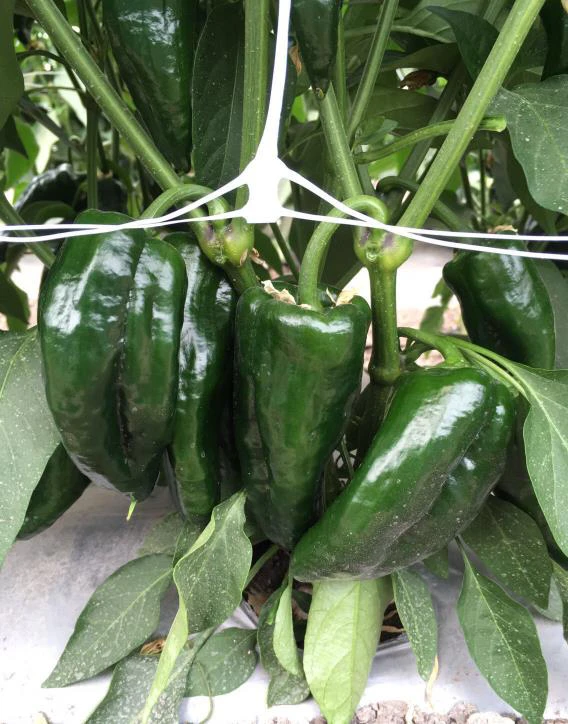
21% more marketable yield and more fruit in every size grade, evaluated in a commercial greenhouse in Guanajuato, Mexico.
Request a QuoteA commercial pepper operation in Penjamo, Guanajuato wanted to raise marketable ancho pepper yield, the fresh green chile sold as poblano, in its greenhouses without changing its core agronomic program. To measure the impact of a biological input, the grower ran a side by side trial across two matched quarter hectare greenhouse blocks, each planted with 8,860 ancho pepper plants transplanted on the same date. The treated block received the grower's standard fertility and crop care program plus the ABI microbial soil consortium, a blend of DNA verified beneficial bacteria and fungi, applied weekly for 12 weeks and then monthly through harvest. The control block ran the identical program with no microbial consortium. An independent evaluator recorded plant vigor, fruit count, fruit size, and harvest weight.
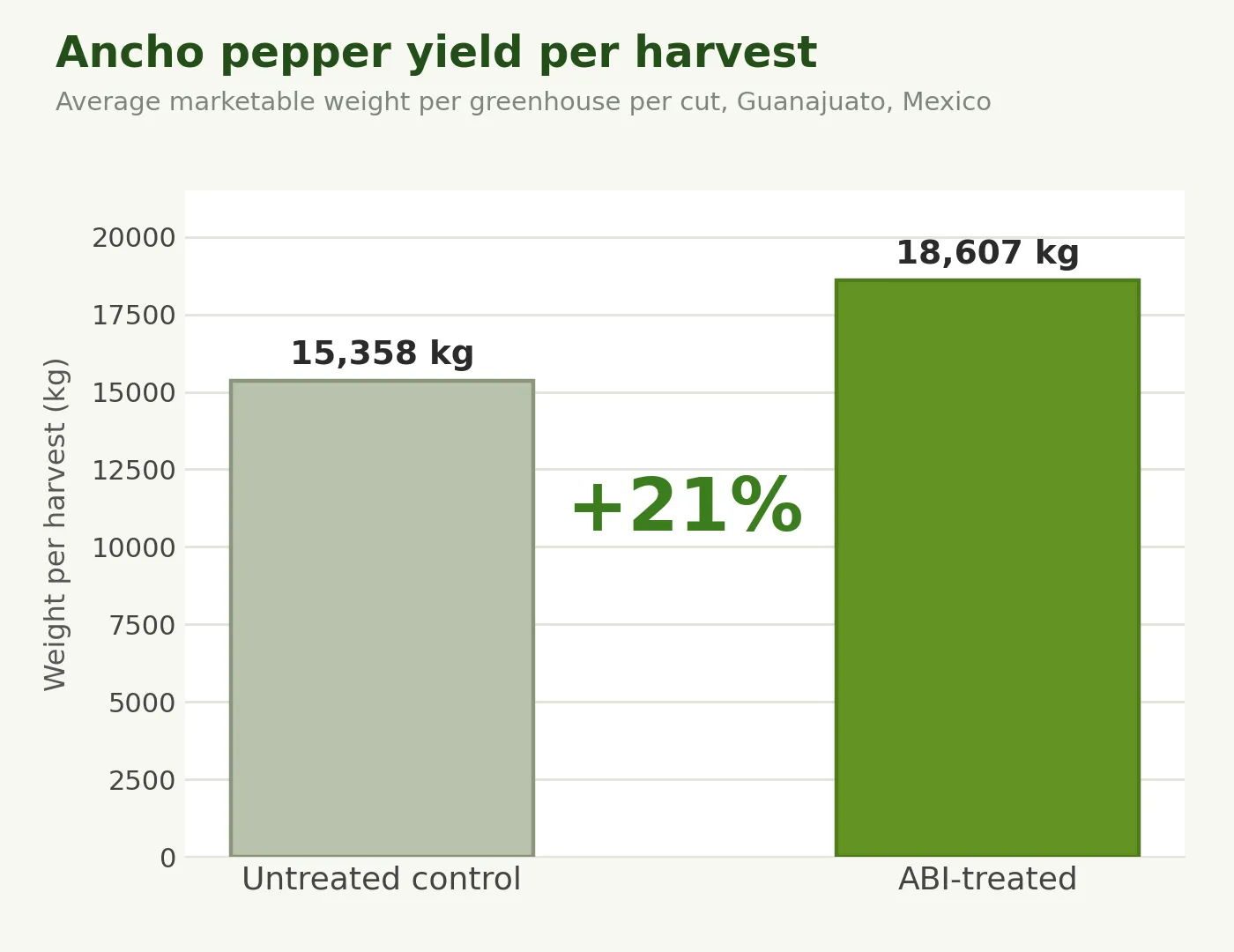
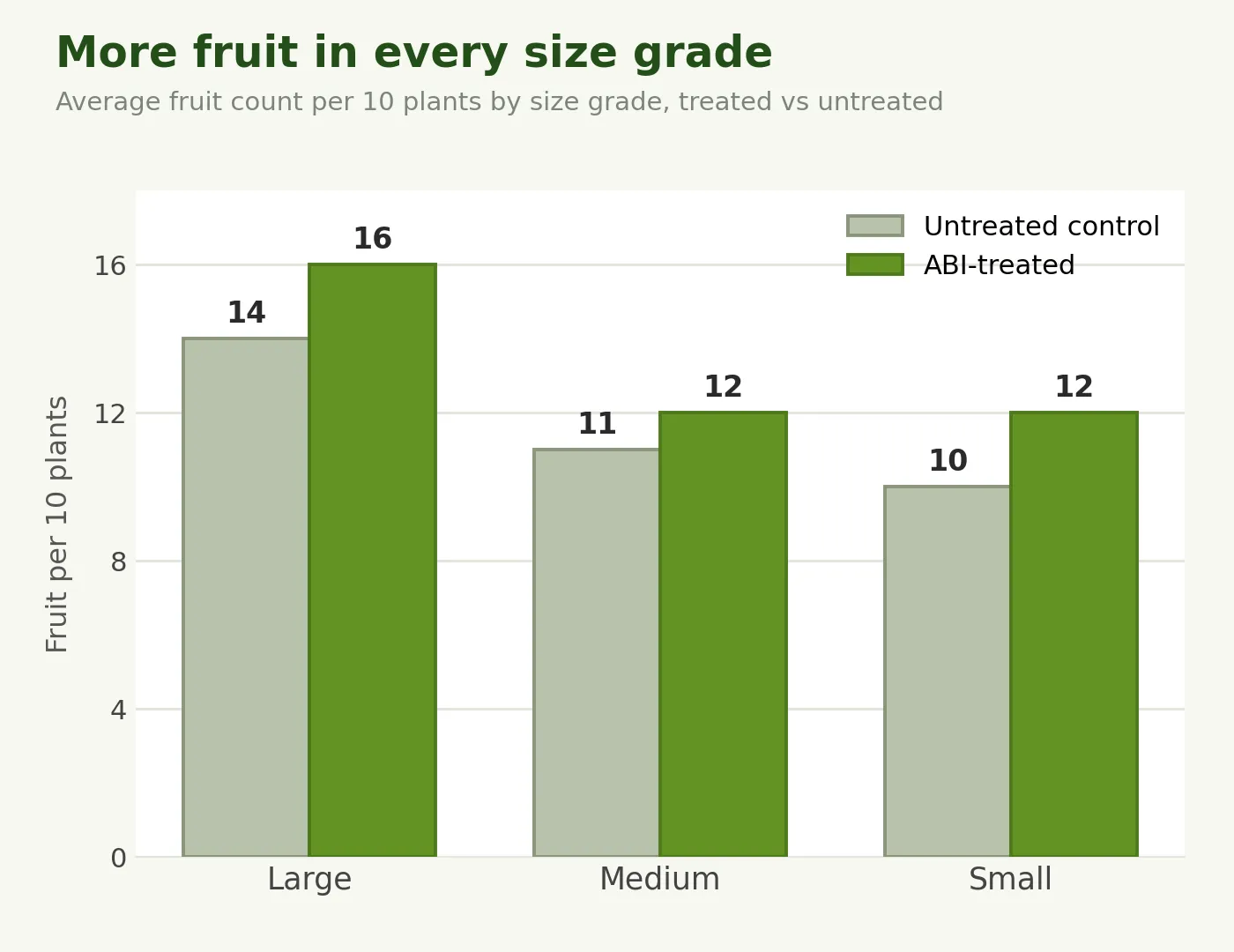
The untreated control block averaged 15,358 kilograms of marketable ancho pepper per harvest, with 35 fruit per 10 plants split across large, medium, and small grades. Within three weeks of transplanting the control canopy was already less uniform, with visible leaf yellowing on part of the block. For a greenhouse pepper grower, harvest weight and the share of large grade fruit set the price a load earns, so a flatter yield curve and fewer premium sized peppers translate directly into lost revenue on every cut.
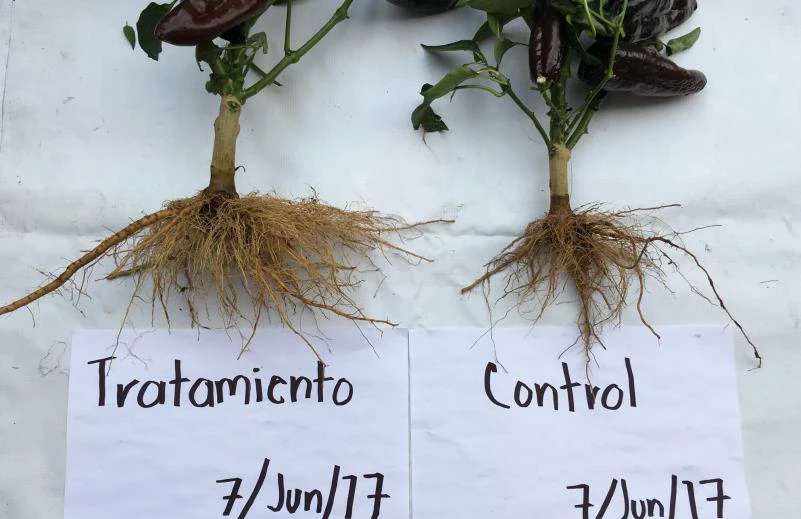
The block treated with the ABI microbial soil consortium averaged 18,607 kilograms of marketable ancho pepper per harvest, 21% more than the untreated control, a gain of 3,249 kilograms per cut. The treated plants also set more fruit in every size grade, 40 fruit per 10 plants versus 35, including two more large grade peppers, and sampled fruit measured 16.5 centimeters against 15.5 centimeters in the control. At root evaluation the treated plants showed noticeably larger, more developed root systems, alongside a taller and more uniform canopy. Because both blocks were transplanted on the same day and ran the same fertility and crop care program, with the microbial consortium as the only difference, the yield and fruit quality gains are cleanly attributable to the treatment.

The treated block was inoculated with the ABI microbial soil consortium, a blend of DNA verified beneficial bacteria and fungi manufactured and fermented in the United States, including Bacillus, Pseudomonas, and Trichoderma species selected to support nutrient cycling and root development. Explore our strains.
Tell us your crop, region, and volume. We reply with pricing and documentation, factory-direct.
Request a Quote© 2026 Applied Biotech Industries | All Rights Reserved.

