Get the free ABI crop trial results pack
12 documented field trials, with real yield, root, and quality gains by crop. Enter your email and it is yours.
Thanks. Here's your pack:
Download the pack (PDF)Beneficial soil microbes are bacteria and fungi that improve plant performance through four core mechanisms: nutrient solubilization, nitrogen use efficiency and cycling, root growth promotion via phytohormones, and stress tolerance. Commercial microbial inoculants concentrate specific strains at high CFU counts. Common families include Bacillus, Pseudomonas, Trichoderma, mycorrhizal fungi, and Streptomyces. In selected field trials, microbial inoculants have been associated with yield gains, improved root development, and better nitrogen use efficiency, with results depending on crop, soil, and application method.
A gram of healthy agricultural soil holds billions of bacteria and fungi. You never see them, but they do most of the biological work that makes soil productive, and soil scientists group them together as the soil microbiome.
Not all of them help the plant. Most are neutral, a few are pathogens, and a smaller group of bacteria and fungi reliably improve how a crop performs through well-characterized biochemical mechanisms. Those are the species worth isolating, fermenting at scale, and selling as microbial inoculants and biofertilizers.
This guide covers what beneficial soil microbes do, the science behind each mechanism, and where the major strain families fit in modern crop production. It is written for distributors, formulators, agricultural brands, and growers evaluating microbial inoculants and custom biological inputs. ABI manufactures single-strain bacterial and fungal inoculants and custom microbial blends for those buyers, and every major topic below links to a deeper article or to a specific strain product page. For the nutrient-cycling side of the story, see the companion nitrogen use efficiency guide.
Field-tested benefits. In selected ABI field trials and grower case studies, results have included yield gains in the 20 to 40 percent range for tomatoes, chilis, and potatoes; much larger gains in saline-alkali rice trials; root mass and root length improvements in the 30 to 80 percent range; high transplant survival compared to untreated controls; and quality gains in specialty crops including hemp, coffee, and ornamentals. Some ABI customers have also reported cutting applied nitrogen fertilizer by 15 to 20 percent while holding or improving yield. These examples are not guarantees of performance. What a microbial inoculant does on your farm depends on crop, soil biology, fertility program, climate, application timing, and management. Detailed case study summaries are available on request through ABI's contact form.
1. What beneficial soil microbes are
Beneficial soil microbes is a working category, not a taxonomic one. It covers the bacteria, fungi, and few other microorganisms shown in peer-reviewed research to improve at least one measurable agronomic outcome: yield, biomass, nutrient uptake, root development, stress tolerance, or soil structure [1].
Most of them live and work in the rhizosphere, the thin layer of soil around plant roots that is chemically dominated by root exudates. Plants release between 10 and 40 percent of the carbon they fix in photosynthesis as exudates into the rhizosphere, and that carbon feeds a far denser microbial community than the bulk soil supports [2].
A microbe is worth using in commercial agriculture when it is:
- Reproducibly effective in the field, not just in the lab
- Stable through manufacturing, storage, and application
- Compatible with common agricultural inputs and practices
- Safe for the operator, the crop, and the surrounding environment
Most commercial inoculants use spore-forming species because spores survive drying, storage, and transit far better than vegetative cells do. That is why Bacillus species and several fungi dominate the catalog of single-strain microbial inoculants and custom microbial blends sold to distributors, formulators, and growers. Their spores hold for months at ambient temperature, which matters for global distribution.
2. The four core mechanisms
Beneficial soil microbes drive plant performance through four connected biochemical mechanisms, and most commercial strains contribute to more than one. Knowing which mechanisms a strain delivers is where strain selection starts.
Quick reference: which strain for which job
- Nitrogen use efficiency (NUE): Bacillus. Examples: B. subtilis, B. licheniformis.
- Phosphate solubilization: Bacillus, Penicillium. Examples: B. megaterium, B. amyloliquefaciens, Penicillium bilaiae.
- Potassium solubilization: Bacillus. Example: B. mucilaginosus.
- Root growth and PGPR: Bacillus, Pseudomonas. Examples: B. subtilis, B. velezensis, Pseudomonas fluorescens.
- Organic matter decomposition: Bacillus, Trichoderma. Examples: B. licheniformis, Trichoderma harzianum.
- Stress tolerance and saline soils: multi-strain blends with Bacillus and Trichoderma, including B. velezensis, B. subtilis, and T. harzianum; also see the Custom Blend Builder.
- Mycorrhizal symbiosis: Glomeromycota. Example: Endo Mycorrhizae.
- Rhizosphere balance and root zone health: various. Examples: Paecilomyces lilacinus, Brevibacillus laterosporus, Beauveria bassiana.
- Custom multi-strain formulation: all families. Use the Custom Blend Builder.
The rest of this section takes the four mechanisms one at a time.
2.1 Nutrient solubilization
A large share of the phosphorus, potassium, and micronutrients applied as conventional fertilizer never reaches the plant. The nutrients are in the soil, but they are bound to mineral surfaces or locked in organic complexes that roots cannot take up directly. Beneficial microbes free them by solubilizing bound nutrients into forms plants can absorb [3].
Phosphate-solubilizing microbes are the best-studied group. Strains of Bacillus, Pseudomonas, Penicillium, and Aspergillus secrete organic acids, including gluconic, citric, and oxalic acid, that chelate the calcium, iron, and aluminum bound to phosphate and release inorganic phosphate into the soil solution. Some strains also produce phosphatase enzymes that hydrolyze organic phosphate compounds, freeing phosphate from plant residues and microbial debris.
Bacillus megaterium is one of the most widely studied phosphate-solubilizing bacteria, with peer-reviewed research documenting real improvements in phosphorus availability when supplemented systems are inoculated with phosphate-solubilizing strains [3]. Penicillium bilaiae is the canonical fungal phosphate solubilizer in commercial use, working the same way. Bacillus mucilaginosus is one of the few microbes characterized for potassium solubilization, releasing K+ from feldspar, mica, and illite through organic acid secretion.
Micronutrient mobilization runs on a related but separate mechanism: siderophore production. Many beneficial bacteria and fungi secrete iron-chelating compounds called siderophores that pick up Fe(III) from soil minerals and carry it into the rhizosphere. This is most valuable in high-pH or calcareous soils, where iron deficiency is common.
For a full treatment of this mechanism, see the deeper article on phosphate-solubilizing bacteria and fungi.
2.2 Nitrogen cycling and associative fixation
Nitrogen is the nutrient most often in short supply in agricultural systems, and the microbial role in nitrogen cycling is more tangled than it is for phosphate.
The best-known microbial contribution is biological nitrogen fixation, which converts atmospheric N₂ into ammonium the plant can use. Symbiotic rhizobia in legume root nodules deliver the bulk of biologically fixed nitrogen in agriculture, and rhizobial inoculants have been on the market since the 1890s. Free-living and associative fixers such as Azotobacter, Azospirillum, and some strains of Pseudomonas and Bacillus add smaller but real amounts in non-legume systems.
ABI's strain catalog works alongside rhizobial nitrogen-fixing programs rather than against them. It focuses on the nitrogen-cycling steps that follow fixation: mineralization of organic nitrogen in plant residues and soil amendments, ammonium release through extracellular protease activity, and microbial support for the wider nitrogen cycle. These steps run alongside legume inoculants and conventional nitrogen sources to raise overall nitrogen use efficiency. The nitrogen use efficiency guide walks through this in detail.
Bacillus subtilis, Bacillus licheniformis, and several Trichoderma species produce proteases and other extracellular enzymes that break down protein and chitin in soil organic matter, releasing ammonium that nitrifying bacteria then convert to nitrate. The result, documented in peer-reviewed field studies, is better nitrogen use efficiency and lower ammonia volatilization losses when microbial inoculants are paired with conventional or organic nitrogen sources [4].
The economics of that are significant. In one peer-reviewed study, replacing 50 percent of urea with a Bacillus subtilis biofertilizer cut nitrogen loss from agricultural soil by 54 percent, raised nitrogen use efficiency by 11.2 percent, reduced ammonia volatilization by up to 44 percent, and increased crop yield by 5 percent [4]. In selected ABI customer programs, growers have reported cutting applied nitrogen fertilizer by 15 to 20 percent while holding or improving yield. For distributors and growers managing large nitrogen budgets, that is a direct per-acre saving on fertilizer and less loss to ammonia volatilization and nitrate runoff. Actual reductions vary with crop, baseline soil fertility, the current nitrogen program, and management.
2.3 Root growth promotion via phytohormones and biofilms
Beneficial microbes do more than feed plants. They signal to them. Many rhizosphere bacteria produce plant-type hormones at low concentrations that stimulate root growth, lateral root branching, and root hair development. The two most important classes are auxins, especially indole-3-acetic acid (IAA), and cytokinins.
More root surface area is one of the most commercially valuable effects of inoculation. A bigger root system explores more soil, reaches more water and nutrients, and steadies the plant under stress. Peer-reviewed studies have documented significant increases in root biomass and root architecture after PGPR (plant growth-promoting rhizobacteria) inoculation, with effect sizes that vary by strain, crop, and field conditions [5]. ABI customer trials show the same pattern. In a commercial green pepper trial using an ABI multi-strain inoculant, treated plants had roughly 39 percent more root mass (126.4 grams versus 91.1 grams wet) and 86 percent longer roots (26 cm versus 14 cm) than untreated controls, with transplant survival of 100 percent versus 70.8 percent in the untreated group.
Bacillus subtilis, Bacillus velezensis, and Pseudomonas fluorescens are all well-documented IAA producers. Beyond hormones, these strains also produce volatile organic compounds like 2,3-butanediol and acetoin that promote plant growth even when the bacteria are separated from the plant by an air gap, which points to a real signaling effect rather than direct nutrient transfer alone.
A second mechanism is biofilm formation. Bacteria like Bacillus subtilis and Bacillus velezensis build structured biofilms on root surfaces, holding a stable microbial presence through wet-dry cycles and competing with less beneficial organisms for space and resources. The biofilm also shields the root surface from desiccation and gives root hairs a steadier local environment to develop in.
2.4 Stress tolerance and plant defense priming
Plants under abiotic stress, whether drought, salinity, heat, cold, or nutrient limitation, grow and yield less. Beneficial soil microbes help plants hold performance under those conditions through several distinct mechanisms.
The first is ACC deaminase activity. Many PGPR strains produce an enzyme that breaks down 1-aminocyclopropane-1-carboxylic acid, the precursor to the stress hormone ethylene. By keeping ethylene from building up in stressed plants, these microbes soften the stress response and let the plant keep growing under conditions that would otherwise trigger leaf senescence, stalled root growth, or premature flowering [6].
The second is osmotic adjustment support. Some strains, several Bacillus species among them, accumulate compatible solutes like proline and glycine betaine in their cells, and through their proximity to roots they appear to influence the plant's own osmotic adjustment machinery, particularly under salinity stress.
The third mechanism is the one that needs the most careful wording. Peer-reviewed research has documented that several Bacillus and Trichoderma species produce specialized metabolites (lipopeptides such as surfactin, fengycin, and bacillomycin from Bacillus; specialized enzymes and signaling compounds from Trichoderma) associated in the scientific literature with induced systemic resistance (ISR), a plant immune-priming response studied for decades [7]. The research base here is large. Commercial communication is deliberately careful: ABI's products are sold as biofertilizers and microbial inoculants, not as pesticides, and pesticidal claims require EPA registration that sits outside biostimulant marketing.
The practical point for growers and formulators is that a healthy soil microbial community is linked in the literature to stronger plant performance under stress, beyond what the simple nutrition story predicts. Knowing why is part of the reason to work with characterized strains rather than generic microbial products.
Field experience backs this up. In one documented commercial trial in Jilin Province, China, an ABI multi-strain microbial inoculant was applied to rice in saline-alkali soil with pH averaging 9 to 10 and salinity of 0.5 to 0.6 percent, conditions in which most crops fail to establish and seedling emergence usually runs below 50 percent. Treated fields yielded 600 kg per 1,000 square meters against 212.5 kg per 1,000 square meters in adjacent untreated controls, close to three times the control yield. It is one of the most striking documented cases of characterized strains supporting production in marginal soil.
Yield is the most visible outcome, but microbial inoculants can shift crop quality too. Where root function, nutrient uptake, and stress response feed into finished product value, the same biology that lifts yield lifts quality.
Quality, not just quantity
The four mechanisms above drive yield, and the same biology drives quality outcomes that matter as much or more in specialty crops. ABI customer trials have documented quality gains alongside yield gains across very different crop systems. In a hemp trial, plants grown with an ABI multi-strain inoculant reached total cannabinoid content of 19.6 percent versus 15.6 percent in untreated controls, roughly a 25 percent gain in finished product value. In organic coffee production in Latin America, treated plants produced denser cherry clusters with better taste quality and visibly less foliage stress than controls. In commercial chili production in Mexico, treated plants produced both higher total yield (18,607 kg versus 15,358 kg per harvest cut) and a higher proportion of large-grade fruit. In commercial orchids, treated beds produced 64 to 71 flowering branches versus 36 in controls, with flower-bud counts more than doubling and flowering up to 4 months earlier.
In specialty crop systems, where price per unit turns on grade, appearance, or composition, those quality gains stack on top of the yield case.
3. How microbial inoculants are manufactured
Commercial microbial inoculants are not soil. They are concentrated, quality-controlled cultures of specific strains, grown to high cell or spore densities under controlled fermentation, then dried and formulated for storage and field use. Manufacturing sets product viability, shelf life, and field performance, and the gap between manufacturers is real.
The standard process runs like this:
- Strain selection and master cell bank. A strain is chosen for documented agronomic effects, sequenced and characterized, and stored as a master cell bank at ultra-low temperature.
- Seed culture. Small volumes of the master cell bank are revived and scaled up in stages.
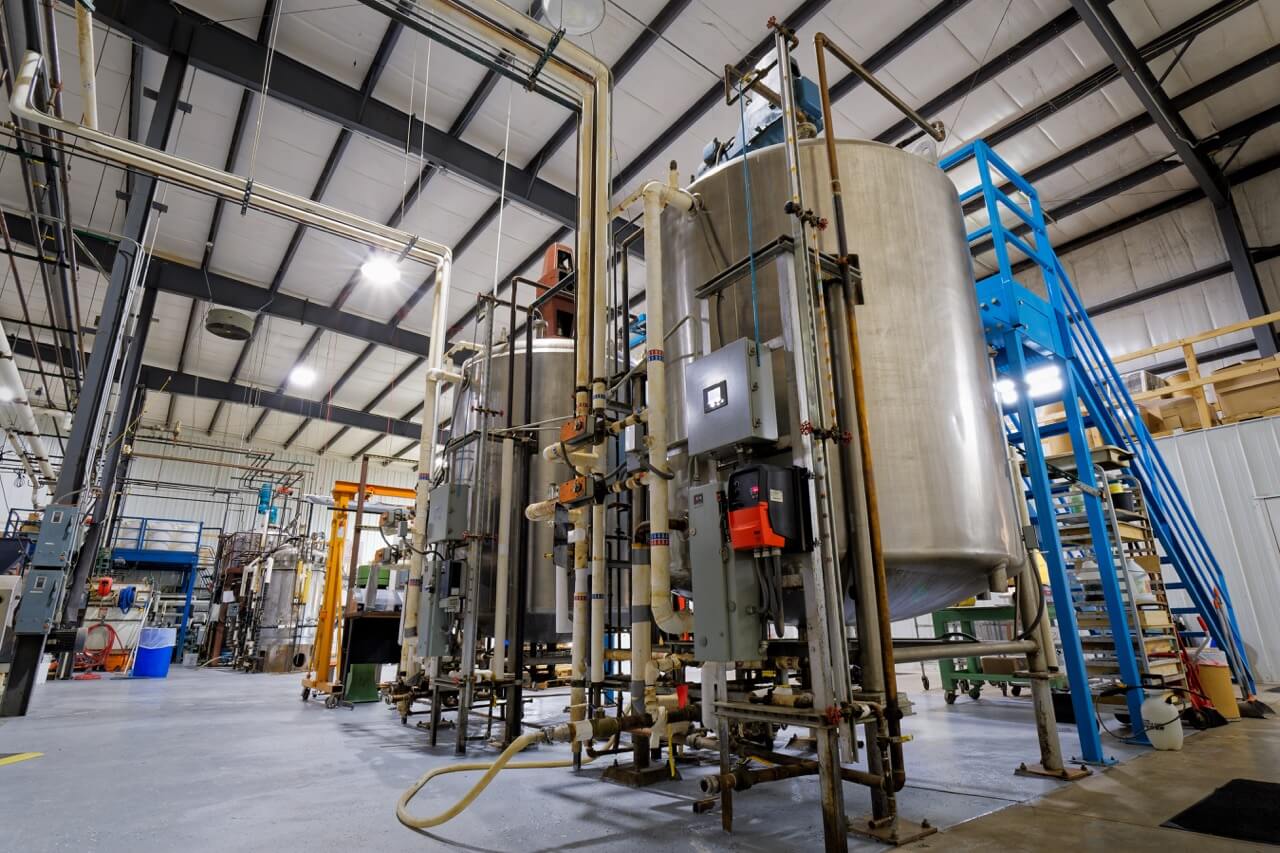
- Production fermentation. The strain is grown in large bioreactors in a defined medium, usually for 24 to 72 hours, until it reaches stationary phase and, for spore-formers, a high spore yield.
- Harvest and stabilization. The fermentation broth is concentrated by centrifugation, and the cells or spores are stabilized for drying.
- Drying. The stabilized concentrate is spray-dried or freeze-dried into a low-moisture powder. Drying is the step most critical to viability.
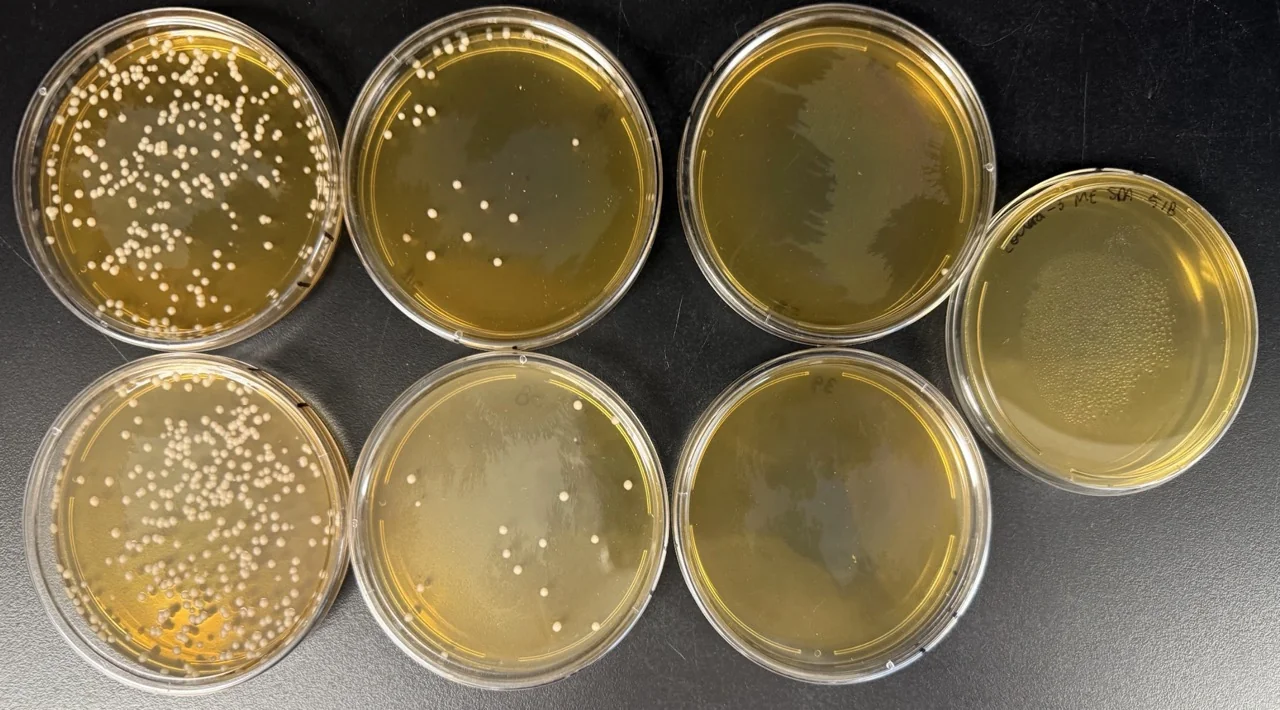
- Quality control. Each batch is tested for colony-forming-unit (CFU) count, strain identity (typically by 16S or ITS sequencing), absence of contaminants, and physical properties like particle size and moisture.
- Formulation and packaging. The dry powder is blended with carriers if needed, then packed in moisture-resistant pails or drums.
ABI's manufacturing follows this template, with most strains delivering between 10 and 500 billion CFU per gram of finished powder, depending on the species and the customer's specification. CFU count matters because a higher count means fewer grams are needed to deliver the dose research has shown to work. For more on what CFU counts represent and how to read them, see the supporting article on CFU counts in microbial inoculants. Buyers specifying a blend to a target function and CFU can also see the custom microbial blend manufacturing guide.
4. The major strain families
Beneficial soil microbes are taxonomically diverse, but a manageable set of genera dominates the commercial catalog of agricultural microbial strains. Each family has its own mechanisms and use cases. ABI manufactures single-strain microbial inoculants and custom microbial blends across all of the families below.
Bacillus
Spore-forming, gram-positive bacteria with the broadest commercial use. Bacillus species stay stable through manufacturing and storage, tolerate harsh field conditions, and stay active across a wide range of soil pH and temperature. Different species lean on different mechanisms:
- B. subtilis: PGPR, biofilm formation, lipopeptide production. Use case: broad PGPR programs, root colonization.
- B. velezensis: PGPR, lipopeptide production. Use case: PGPR + ISR research applications.
- B. megaterium: phosphate solubilization. Use case: P-availability programs.
- B. amyloliquefaciens: phosphate solubilization, biofilm. Use case: P-availability + PGPR programs.
- B. mucilaginosus: potassium solubilization. Use case: K-availability from soil minerals.
- B. licheniformis: protease production, organic matter cycling. Use case: compost and residue decomposition.
- B. pumilus: PGPR, biofilm formation. Use case: complementary PGPR programs.
- B. methylotrophicus: PGPR, methylotrophic activity. Use case: carbon cycling and rhizosphere support.
- Brevibacillus laterosporus: PGPR, plant interactions. Use case: root health and rhizosphere balance.
Pseudomonas
Gram-negative, non-spore-forming bacteria with very strong PGPR traits. Pseudomonas fluorescens is the most widely studied species for root colonization, siderophore production, and rhizosphere ecology. Pseudomonas protegens is a complementary species with documented secondary-metabolite activity in the research literature. Pseudomonas products need slightly more careful storage than Bacillus products because they form no dormant spores, but they perform very well under good handling.
Trichoderma
Filamentous fungi that colonize plant roots and the surrounding soil, producing a wide range of enzymes and metabolites. Trichoderma species break down organic matter, support root development, and have been studied extensively for their interactions with the soil microbial community. T. harzianum is the most widely commercialized species, with documented activity across many crop systems. T. koningiopsis, T. longibrachiatum, and T. asperellum are complementary species with somewhat different metabolite profiles.
Mycorrhizal fungi
Symbiotic fungi that connect directly to plant roots and extend the root system's effective absorption volume by orders of magnitude. Endomycorrhizae, specifically arbuscular mycorrhizal fungi (AMF), form intracellular structures called arbuscules inside root cortex cells and are the relevant type for most agricultural crops, including all the major row crops, vegetables, and fruit. Ectomycorrhizae form external sheaths around root tips and matter mainly in forestry and a few orchard species. ABI supplies Endo Mycorrhizae as a standalone inoculant and as a component of custom blends. For the full picture of how the symbiosis works, which crops respond, and how to evaluate an inoculant label, see the guide to mycorrhizal fungi in agriculture.
Other commercial strains
Paecilomyces lilacinus (reclassified as Purpureocillium lilacinum) is a chitin-degrading fungus studied in peer-reviewed research for its rhizosphere interactions and root zone effects. Beauveria bassiana is a naturally occurring soil fungus, well known in the scientific literature for its ecological role and its presence in healthy soil microbiomes. Streptomyces rochei is a filamentous bacterium from a genus famous for diverse secondary-metabolite production and studied applications in soil health programs.
For deep dives on individual strains, see the strain-specific posts in the Cluster B series.
Need a bulk quote on a specific Bacillus, Trichoderma, Pseudomonas, or other strain? ABI manufactures single-strain microbial inoculants and custom microbial blends for distributors, formulators, and private-label brands. Browse Bacteria strains, browse Fungi strains, or request a custom blend specification.
5. How to choose a microbial inoculant
For a grower or formulator choosing among commercial microbial inoculants, four questions drive the decision.
What is the target function? Phosphate availability, potassium availability, root growth promotion, organic matter decomposition, and stress tolerance support are different jobs, and the strains built for each are different. A custom blend can combine strains with complementary mechanisms.
What is the application method? Seed treatment, in-furrow application, drip-line fertigation, foliar spray, and compost or substrate inoculation each ask something different of the product format. Powder formulations cover most applications. Liquid formulations suit drip lines and foliar work but have a shorter shelf life. The supporting article on liquid versus powder formulations covers the trade-offs.
What is the crop system? Specialty crops respond differently than row crops. Greenhouse and protected-ag systems differ from field systems. Organic systems need certified-compatible inputs. Each context narrows the strain and the formulation.
What is the manufacturing source? CFU counts, strain identity verification, batch QC, and supply-chain transparency matter, especially for distributors and private-label brands building their own product lines. Working straight with a manufacturer rather than through trading-house intermediaries makes traceability simpler and shortens the path from a QC concern to a QC fix.
ABI manufactures a broad catalog of bacterial and fungal strains at our Wisconsin facility and supports both off-the-shelf single-strain inoculants and custom blends built to a customer's spec. The custom blend builder lets distributors and formulators set strains, CFU concentrations, and carrier preferences in a single workflow.
Available formats. ABI supplies high-CFU microbial powders in bulk packaging for distributors, formulators, OEM customers, and private-label brands. Options include single strains and multi-strain blends, custom CFU specifications, carrier selection, and packaging matched to the customer's distribution and labeling needs. Specifications and quotes are available through the contact form or the custom blend builder.
References
FAQ
What is the difference between a biofertilizer and a biopesticide?
The difference is in what the product claims to do. Biofertilizers and microbial inoculants support plant growth, nutrient uptake, and soil health, and they are regulated as soil amendments or biostimulants depending on the jurisdiction. Biopesticides make explicit claims to prevent, destroy, or control pests, weeds, or disease, and in the United States those claims require EPA registration under FIFRA. ABI sells its strains as biofertilizers and microbial inoculants, not as pesticides.
How long do beneficial soil microbes live in the soil after application?
It depends on the strain and the conditions. Spore-forming species like Bacillus can persist for weeks to months because their spores tolerate drying and temperature swings, and strains that form biofilms on roots tend to hold longer. Non-spore-formers such as Pseudomonas are more sensitive and usually establish best with good moisture and timing. In practice, most programs treat inoculation as something to repeat by season or crop stage rather than a one-time event.
Are microbial inoculants compatible with conventional fertilizer programs?
Yes. Microbial inoculants are designed to work alongside NPK and micronutrient programs, not replace them. In many systems the microbes raise the efficiency of the fertilizer already being applied, for example by improving nitrogen use efficiency or by solubilizing bound phosphorus and potassium. Avoid tank-mixing live inoculants with strong bactericides or high rates of certain fungicides, and follow the product's compatibility guidance on timing.
Do microbial inoculants work in cold soils?
Activity slows in cold soil, as it does for the crop itself, but spore-forming strains stay viable through cold spells and become active as soil warms. For early-spring applications, timing matters more than in warm conditions: place the inoculant near the root zone and expect the biological response to build as temperatures rise. Spore-formers like Bacillus are the more forgiving choice for cold or early plantings.
Are these products safe for organic production?
Many microbial inoculants are compatible with certified organic production, but it comes down to the specific formulation, including the carrier and any additives. In the United States that usually means OMRI listing or compatibility with USDA NOP rules; other markets have their own equivalent programs. ABI's catalog is generally compatible with organic production, and the specific formulation should be checked against the certification program that applies to your operation.
How do CFU counts translate to field performance?
CFU (colony-forming units) measures how many viable cells or spores a product delivers per gram. A higher count means fewer grams are needed to reach the effective dose, which is why bulk buyers pay attention to it. It is necessary but not sufficient on its own: strain identity, viability at the point of use, formulation quality, and correct application all shape the field result. A verified high-CFU product from a known strain is what makes a dose reliable.
What is PGPR?
PGPR stands for plant growth-promoting rhizobacteria, the category that covers most of the beneficial soil bacteria in this guide. PGPR strains support plant performance through some mix of hormone production, nutrient solubilization, root colonization, and stress tolerance support. Bacillus subtilis, Bacillus velezensis, and Pseudomonas fluorescens are widely used examples.
Which beneficial soil microbe should I choose for my crop or formulation?
Start with the function you need. For phosphorus availability, look at Bacillus megaterium or Penicillium bilaiae; for root growth, PGPR strains like Bacillus subtilis and Pseudomonas fluorescens; for organic matter breakdown, Trichoderma harzianum. Most real programs combine complementary strains, which is what the Custom Blend Builder is for.
Can microbial inoculants reduce my nitrogen fertilizer use?
In many systems, yes. Peer-reviewed research has documented meaningful gains in nitrogen use efficiency when microbial inoculants are paired with conventional or organic nitrogen, including up to 54 percent less nitrogen loss from soil and up to 44 percent less ammonia volatilization when half the urea was replaced with a Bacillus subtilis biofertilizer. Some ABI customers have reported cutting applied nitrogen by 15 to 20 percent while holding yield. The nitrogen use efficiency guide covers how this works, and actual reductions depend on crop, soil, and program.
What yield improvements have growers reported with ABI's microbial inoculants?
Documented commercial trials and grower case studies with ABI multi-strain inoculants have reported yield gains generally in the 20 to 40 percent range for tomatoes, potatoes, and chili peppers, with much larger gains in stress-soil systems such as saline-alkali rice. Specialty crops have shown quality gains alongside yield, including higher cannabinoid content in hemp and more flowering branches in orchids. These are documented results, not guarantees; outcomes depend on crop, soil, and management. Case study summaries are available through the contact form.
Can I buy individual microbial strains in bulk?
Yes. ABI manufactures more than two dozen single bacterial and fungal strains at our Wisconsin facility and supplies them in bulk to distributors, formulators, OEM customers, and private-label brands. You can order a single strain or a multi-strain blend. Specifications and quotes are available through the contact form.
Can ABI produce a custom microbial blend?
Yes. Custom multi-strain blends are a core part of what ABI manufactures. You can specify the strains, target CFU concentrations, carrier, and packaging to match your crop, application method, and labeling needs. Start with the Custom Blend Builder, or see the custom microbial blend manufacturing guide for how the process works.
What CFU concentrations does ABI supply?
ABI supplies high-CFU microbial powders ranging from roughly 10 billion to 300 billion colony-forming units per gram of finished product, depending on the species and the customer's specification. Custom concentrations are available on request for distributor and private-label customers.
Where can I buy these strains in bulk or for private label?
ABI manufactures more than two dozen bacterial and fungal strains at our Wisconsin facility and supplies bulk, wholesale, OEM, and private-label customers worldwide. Specifications and quotes are available through the contact form or the custom blend builder.
Browse ABI's strain catalog
Single-strain microbial inoculants and custom blends, manufactured in Wisconsin. Bulk, wholesale, and private label.