Get the free ABI crop trial results pack
12 documented field trials, with real yield, root, and quality gains by crop. Enter your email and it is yours.
Thanks. Here's your pack:
Download the pack (PDF)Potassium-solubilizing bacteria are soil microbes, led by Bacillus mucilaginosus, that release plant-available potassium from the feldspar, mica, and clay minerals that hold 90 to 98 percent of the potassium in most soils. They work by secreting organic acids and mineral-binding polysaccharides that weather those minerals in the root zone. Applied as an inoculant, they raise the share of soil potassium a crop can take up, which lowers the potash needed to hit yield targets.
Most agricultural soils hold thousands of pounds of potassium per acre, and the crop growing on them can reach almost none of it. Ninety to 98 percent of soil potassium sits locked inside the crystal structure of feldspar, mica, and clay minerals, released only as those minerals weather, which under normal conditions takes years to decades [1]. What a plant can take up in a season is the 1 to 2 percent dissolved in soil water or held loosely on clay surfaces, and that small pool is what a potash application refills.
Potassium-solubilizing bacteria work on the other 98 percent. They are soil microbes, the best studied being Bacillus mucilaginosus, that speed up mineral weathering in the root zone by secreting organic acids and sticky polysaccharides that pull potassium out of the mineral lattice and into solution [2][3]. This guide covers how they do it, which strains are proven, what the research shows, and how to add potassium to soil with and without them. It is written for growers and agronomists deciding whether a biological belongs in their potassium program, and for the distributors who supply them. For the broader picture of how these organisms fit alongside phosphate and nitrogen microbes, start with the guide to how beneficial soil microbes work.
Key takeaways
- Soil potassium exists in four pools. Only the solution and exchangeable pools, 1 to 2 percent of the total, are available to a crop this season. The mineral pool holds the rest.
- Potassium-solubilizing bacteria release potassium from feldspar, mica, and illite by secreting organic acids that dissolve the mineral surface and polysaccharides that bind to it and hold the acid there.
- Bacillus mucilaginosus is the reference strain. Several other Bacillus species, plus the fungus Aspergillus niger, solubilize potassium as a secondary function, which is why multi-strain blends usually cover it.
- Peer-reviewed trials have found higher potassium uptake and growth in inoculated crops, particularly where total soil potassium is high but available potassium is low. Effects vary with soil and mineralogy.
- The fastest way to add potassium to soil is still potash fertilizer. Microbes lower how much potash you need and how much of it gets fixed, rather than replacing it.
- ABI manufactures Bacillus mucilaginosus at 10 billion CFU per gram in Wisconsin, single-strain or in custom blends, with strain identity verified by PCR on every batch.
Table of contents
- What are potassium-solubilizing bacteria?
- Where soil potassium hides: the four pools
- How potassium-solubilizing bacteria work
- Which strains solubilize potassium
- What the research shows
- How to add potassium to soil
- Signs of potassium deficiency in plants and crops
- Using potassium-solubilizing bacteria in a fertility program
1. What are potassium-solubilizing bacteria?
Potassium-solubilizing bacteria, abbreviated KSB in the research literature and sometimes called potassium-mobilizing or potash-mobilizing bacteria, are soil microorganisms that convert insoluble mineral potassium into the dissolved potassium ion, K+, that plant roots absorb [2]. The term covers a functional group rather than a single family. Bacillus mucilaginosus (also classified as Paenibacillus mucilaginosus) is the organism most of the literature is built on, with Bacillus edaphicus, Bacillus circulans, several Pseudomonas and Burkholderia species, Acidithiobacillus ferrooxidans, and Frateuria aurantia also characterized [2][3]. Among fungi, Aspergillus niger and Aspergillus terreus do the same job through the same chemistry [3].
These bacteria were first isolated from the surfaces of potassium-bearing rock, where they live by weathering the mineral for the nutrients inside it. In the rhizosphere they do the same thing next to a root, feeding on root exudates and releasing potassium, along with silicon, phosphorus, and trace elements bound in the same minerals, as a byproduct. Using them as a microbial inoculant means putting a dense population of a proven weathering organism where the roots are, on a soil that has plenty of mineral potassium to weather.
2. Where soil potassium hides: the four pools
Potassium is usually the most abundant of the three major nutrients in soil, commonly 0.5 to 2.5 percent of the soil by weight, which works out to tens of thousands of pounds per acre in the plow layer [1]. Almost none of it is available. Soil scientists divide it into four pools in equilibrium with one another [1]:
| Pool | Share of total soil K | Where it is | Availability to this season's crop |
|---|---|---|---|
| Solution K | 0.1 to 0.2 percent | Dissolved in soil water | Immediate; the only form roots take up |
| Exchangeable K | 1 to 2 percent | Held on the negatively charged surfaces of clay and organic matter | Readily available; refills solution K within hours to days |
| Non-exchangeable (fixed) K | 1 to 10 percent | Trapped between the layers of 2:1 clays such as illite and vermiculite | Slowly available over months to years; also where applied potash disappears to on high-clay soils |
| Mineral (structural) K | 90 to 98 percent | Inside the crystal lattice of feldspar, muscovite and biotite mica, and illite | Unavailable except through weathering, which takes decades under normal conditions |
A standard soil test measures the first two pools and reports them as available potassium. That number can read low on a soil whose total potassium is enormous, and the difference between the two is the pool potassium-solubilizing bacteria feed on.
Potassium is hard to manage even on well-fertilized ground. Applied potash does not stay put. On soils rich in 2:1 clays, a share of every application is fixed between clay layers, where it is protected from leaching but also from the crop, and wet-dry cycles push more of it in [1]. Potassium also reaches roots mainly by diffusion through soil water, not by mass flow with the water the plant drinks. Diffusion slows sharply as soil dries, which is why potassium deficiency symptoms appear in a dry July on fields that tested fine in April [4]. A crop with a bigger, better-distributed root system reaches more of the potassium that is there.
3. How potassium-solubilizing bacteria work
The chemistry is mineral weathering, run fast, in a thin film around the bacterial cell. Three mechanisms do most of the work [2][3][5].
Organic acid production. Potassium-solubilizing bacteria secrete low-molecular-weight organic acids: oxalic, citric, tartaric, gluconic, succinic, and malic acids among them. The acids lower pH at the mineral surface, which lets protons displace potassium ions from the lattice, and their carboxyl groups chelate the aluminum, silicon, and iron that hold the lattice together. Pull those out and potassium comes out with them. Oxalic and citric acids are the most effective in most studies because they are strong chelators as well as acids [2].
Extracellular polysaccharides. This is the trait that gave Bacillus mucilaginosus its name. The bacterium produces a capsule of slimy polysaccharide that glues the cell to the mineral surface. The capsule holds the secreted acids against the mineral instead of letting them diffuse away, and it absorbs the released potassium and silicon, which keeps the local concentration low and the weathering reaction moving forward [3][5]. Cells growing as a biofilm on a feldspar grain weather it far faster than free-floating cells in the same solution.
Root growth and rhizosphere effects. The same Bacillus strains produce plant hormones, chiefly indole-3-acetic acid, that increase root branching and root hair density [2]. Because potassium moves to the root by diffusion over short distances, a root system that explores more soil volume captures more potassium regardless of how much was solubilized. In field trials this root effect and the solubilization effect are hard to separate, and for the grower it does not much matter which one delivered the potassium.
The result in the root zone is a steady, small release of potassium from the mineral pool into solution, close enough to the root to be taken up before clay refixes it. It is the same weathering that builds available potassium in soils over centuries, sped up by putting a large population of weathering organisms right at the root.
4. Which strains solubilize potassium
Potassium solubilization is a strongly strain-dependent trait. Within a species, isolates vary widely in how much potassium they release, so the strain and its documented performance matter more than the species name on the label [2]. The table lists the organisms in ABI's catalog with meaningful potassium activity, ranked by the functional profile score published on each strain page.
| Strain | Potassium role | Also solubilizes | Notes |
|---|---|---|---|
| Bacillus mucilaginosus | Primary function; the reference KSB in the literature | Silicon, phosphorus, calcium, iron, zinc, manganese | Polysaccharide capsule; also improves soil aggregation and water retention. ABI produces it at 10 billion CFU per gram |
| Bacillus licheniformis | Strong secondary | Phosphorus, silicon | Spore-former with wide temperature tolerance; heat- and drought-resilient |
| Bacillus megaterium | Secondary | Phosphorus (its primary function) | The phosphate strain; releases potassium through the same organic acid pathway |
| Bacillus subtilis | Secondary | Phosphorus, silicon | Broad PGPR; root growth promotion multiplies the uptake effect |
| Bacillus pumilus and Bacillus velezensis | Secondary | Phosphorus | Contribute potassium activity inside multi-strain blends |
| Aspergillus niger | Secondary (fungal) | Phosphorus, micronutrients, organic matter | Prolific organic acid producer; the fungal counterpart to B. mucilaginosus |
Bacillus mucilaginosus is the strain to specify when potassium is the target. The other strains are in the table because the minerals that hold potassium also hold silicon and, in the case of apatite inclusions, phosphorus, and the organic acids that free one free the others. That is why a well-designed fertility blend pairs a potassium strain with a phosphate strain such as Bacillus megaterium or Penicillium bilaiae, covered in the guide to phosphate-solubilizing bacteria and fungi, and why growers who add a potassium strain to an existing program usually see the phosphorus number move too.
When comparing products, keep two things in mind. Some labels claim potassium solubilization for strains with no documented activity, on the strength of the genus name alone. Ask the supplier for the isolate's own data. And CFU counts for a slime-producing organism like B. mucilaginosus are lower by nature than for a clean spore-former, which is normal and covered in the guide to what CFU means; 10 billion CFU per gram is a strong figure for this species.
5. What the research shows
Potassium solubilization has been studied for decades. Most studies find more potassium uptake in inoculated crops; how much more varies widely.
In controlled work, Bacillus edaphicus inoculation of wheat grown on soil amended with feldspar or illite increased potassium uptake and plant growth compared with uninoculated controls, with the organism releasing potassium from both minerals in culture [6]. Bacillus mucilaginosus applied with waste mica, a cheap potassium-bearing byproduct, raised potassium uptake in sudan grass across two soils and shifted potassium from the non-exchangeable pool toward the available pools over the season [7]. Co-inoculation of a potassium solubilizer with a phosphate solubilizer, alongside rock phosphate and rock potassium, increased availability and uptake of both nutrients in eggplant relative to the same rock materials without inoculation [8]. The 2014 review by Meena and colleagues collected studies across cereals, vegetables, and oilseeds reporting higher potassium uptake, and in many cases higher yield, from potassium-solubilizing inoculants, and concluded that the effect is largest on soils with high total but low available potassium and on those receiving low-grade mineral sources such as mica or feldspar rather than soluble potash [2].
The size of the response depends on which potassium minerals the soil contains; illite and biotite weather readily, microcline feldspar slowly. Responses are smaller where soluble potash is already applied at full rate, because the crop is not potassium-limited in the first place. And most of the published work is greenhouse or short-term field research, so the right reading is a consistent mechanism with variable field magnitude, not a fixed percentage.
ABI's own data points in the same direction. In a 2020 case on fresh-market tomatoes in eastern Tennessee, a Waypoint Analytical soil digestion showed thousands of pounds per acre of potassium in a soil growing visibly malnourished plants, and a BeCrop DNA analysis showed the biological pathways that make nutrients available running low. Three weeks after ABI's multi-strain consortium went on, leaf-tissue potassium was up about 20 percent, with phosphorus and nitrogen moving up alongside it. With two in-season tissue samples this is a field observation rather than a controlled trial, but it is a direct look at microbes turning stranded soil potassium into potassium the crop could take up. The nitrogen side of that case is written up in the guide to nitrogen use efficiency.
6. How to add potassium to soil
Growers searching this question usually want two things: the fastest fix for a crop showing deficiency, and a way to stop needing the fix every year.
Start with a soil test. Available potassium below the critical level for your soil type and crop, commonly around 120 to 170 ppm on the ammonium acetate test for Corn Belt row crops, though your regional extension calibrations are the authority, means the crop will respond to added potassium this season. A test near or above that level with a deficient-looking crop points to an uptake problem, usually dry soil, compaction, restricted roots, or fixation, and more potash will not fix it.
The fastest way to add potassium to soil is soluble potash fertilizer. Muriate of potash (potassium chloride, 0-0-60) is the cheapest and most common; sulfate of potash (0-0-50) suits chloride-sensitive crops and adds sulfur; potassium nitrate and potassium sulfate-magnesia (langbeinite, 0-0-22) fit specialty programs. Broadcast and incorporate before planting or band at planting, and for an in-season rescue on a high-value crop, fertigate a soluble form or apply a foliar potassium product to buy time. Soluble potassium is available to roots within days, which nothing biological can match.
To add potassium to soil naturally, the organic sources are wood ash (fast-acting, raises pH, use sparingly), kelp meal and other seaweed products, compost and manure (a modest but steady supply; manure from potassium-fed livestock can be substantial), and greensand or crushed granite and feldspar dusts, which are mineral potassium that releases very slowly. The last group is the material potassium-solubilizing bacteria work on best, which is why the research pairs the two [2][7].
To need less potash over time, work on the soil's ability to supply potassium from its own reserves. Build root systems, keep soil moist through the uptake window where irrigation allows, avoid compaction, and put a documented potassium-solubilizing strain in the root zone on a soil whose total potassium is high. On most agricultural soils, total potassium is high. On a soil that tests high in total potassium but low in available potassium, the microbial route is what lets you back the potash rate down without giving up yield.
7. Signs of potassium deficiency in plants and crops
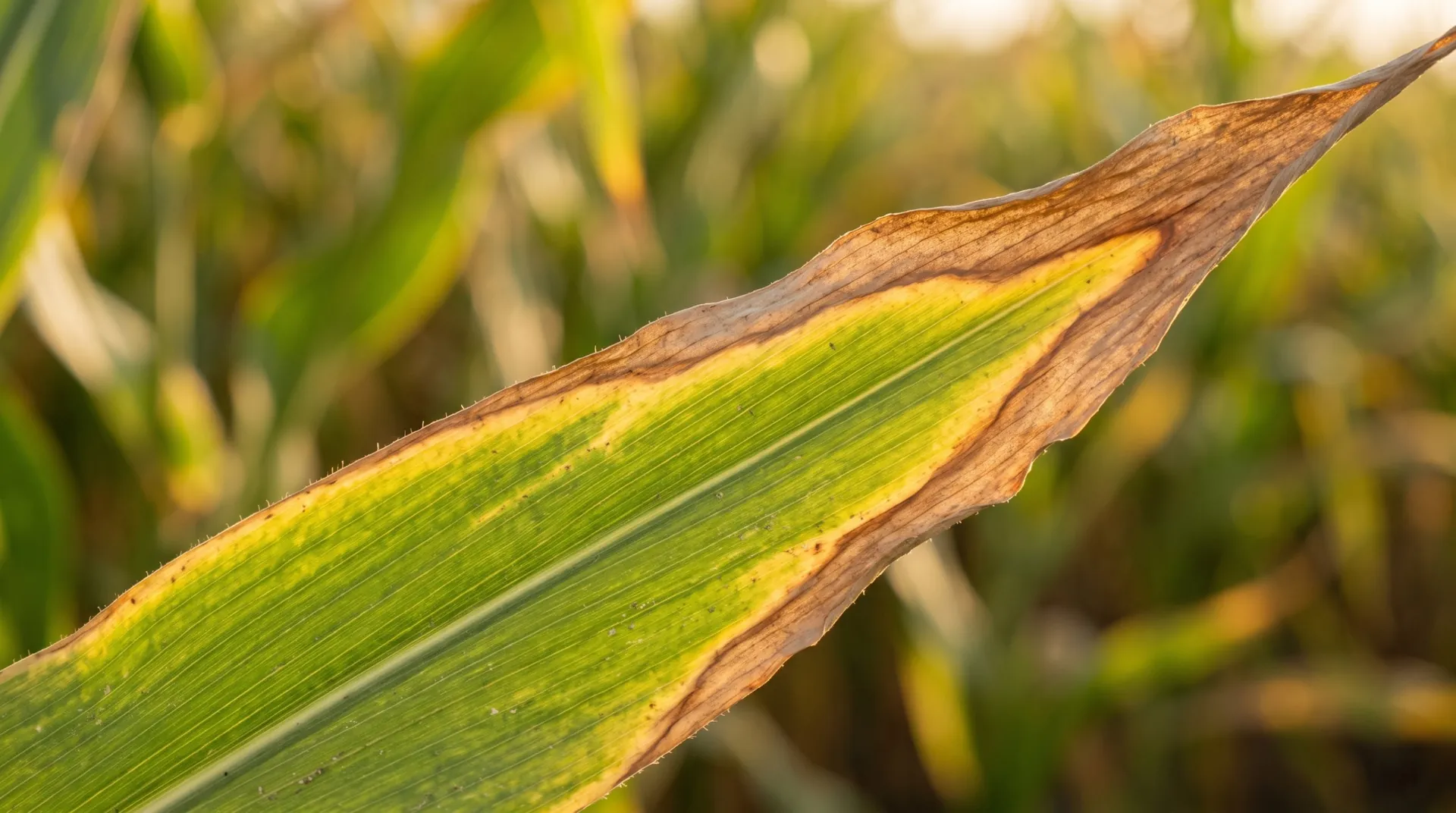
Potassium is mobile inside the plant, so a short supply is pulled from old leaves to feed new growth and the symptoms show up low on the plant first. The classic sign is yellowing along the leaf margins of the older leaves, progressing to a scorched, brown edge while the midrib stays green. In corn, deficient plants also have weak, pithy stalks that lodge late in the season and ears that fail to fill at the tip. In soybeans, the marginal yellowing shows on the older and middle leaves and the stand looks uneven, with symptoms often worst on the driest, most compacted parts of the field. Alfalfa shows small white or yellow spots along the leaf edges. Fruit and vegetable crops show the deficiency as poor fruit size, uneven ripening, and low sugar content, because potassium drives the transport of sugars into the fruit [4].
Because dry soil restricts potassium diffusion, deficiency symptoms often appear during a dry spell on ground that tested adequate, then fade when rain returns. That pattern is the signature of an uptake problem, and it is where a bigger root system and a more active rhizosphere pay off most.
8. Using potassium-solubilizing bacteria in a fertility program
A few practical rules from ABI's customers and the research.
Match the soil. The strongest responses come on soils with abundant mineral potassium and a low available reading: weathered soils on granitic or micaceous parent material, high-clay soils that fix applied potash, and long-cropped fields where the exchangeable pool has been mined down. Sandy soils with little mineral potassium have less mineral potassium to release, and a program there leans on the root-growth effect and on pairing the inoculant with a mineral potassium source.
Apply early and to the root zone. ABI's Bacillus mucilaginosus is applied at 500 to 1,000 grams per acre (1.25 to 2.5 kilograms per hectare) through drip, drench, or fertigation, or as a soil application at planting, with a second application in the growth phase. The organism needs time to colonize and build biofilm on mineral surfaces before the crop's peak potassium demand, which for most crops is rapid vegetative growth through early reproductive stages. In-furrow at planting (100 to 200 grams per acre, or 250 to 500 grams per hectare) or with the first irrigation is better than a mid-season rescue.
Pair it with the right partners. A potassium strain, a phosphate strain, and a broad PGPR such as Bacillus subtilis cover the three main mineral-solubilization functions in one application, and adding endomycorrhizae extends the root system's reach into soil the crop would never otherwise explore. ABI specifies these combinations by target function and per-strain CFU through the custom blend builder, and the buyer's-side view of that process is in the custom microbial blend manufacturing guide.
Keep the chemistry compatible. Dilute liquid fertilizers before tank-mixing, keep the microbes out of tank mixes with herbicides, fungicides, bactericides, and other pesticides, and follow the technical sheet's guidance on spray intervals. The strains are spore-formers and tolerate a wide pH and temperature range, but a fresh application into a tank of undiluted concentrate is a waste of product.
Measure it. Tissue-test potassium at the same growth stage in treated and untreated strips, and track the available potassium reading on the soil test year over year. Those two numbers, more than any yield map, tell you whether the soil's own potassium supply is starting to carry more of the load.
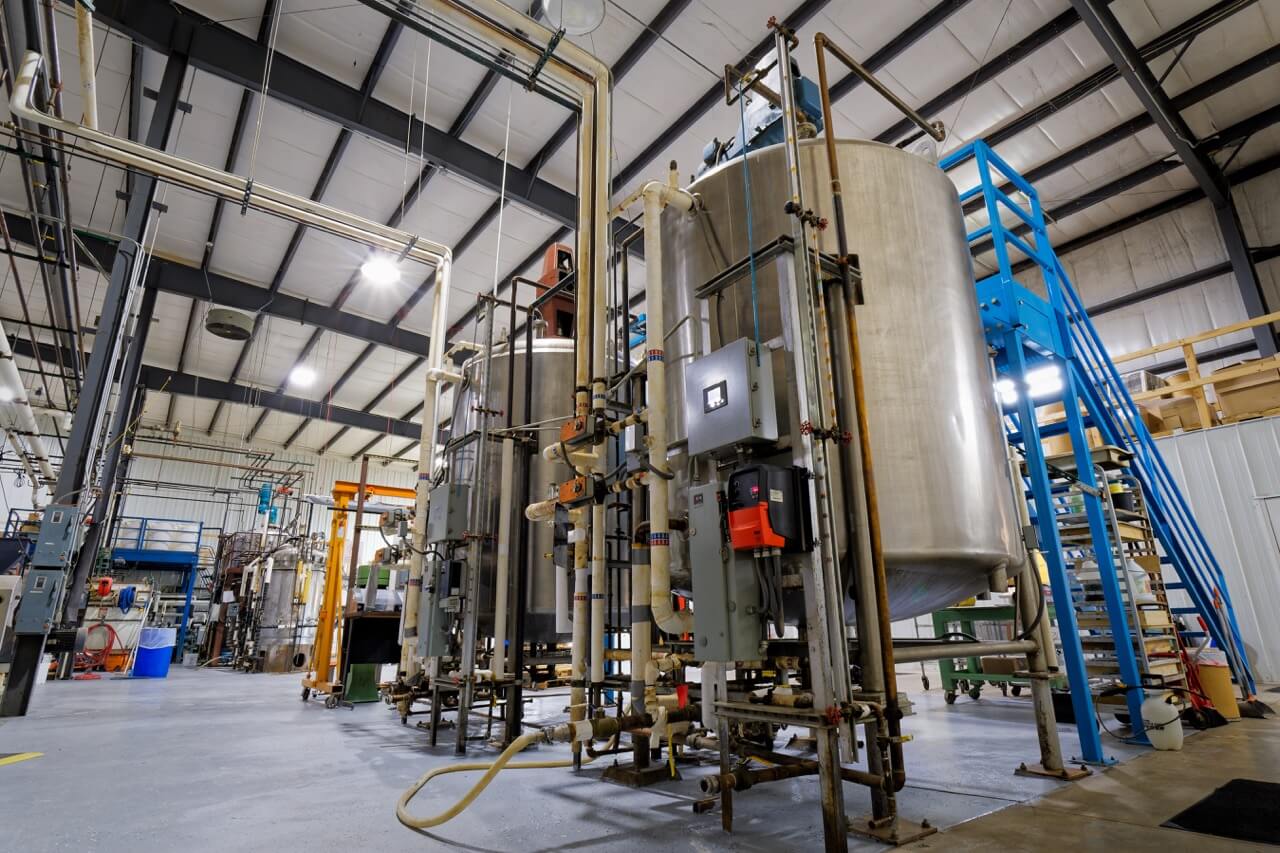
For buyers: ABI manufactures Bacillus mucilaginosus and the Bacillus strains above at its Wisconsin facility, single-strain at 10 billion CFU per gram or blended to your specification, with strain identity verified by PCR and a Certificate of Analysis on every batch. Request specs and pricing or spec a blend.
References
FAQ
What are potassium-solubilizing bacteria?
Potassium-solubilizing bacteria, or KSB, are soil microbes that release plant-available potassium from feldspar, mica, and clay minerals by secreting organic acids and mineral-binding polysaccharides. Bacillus mucilaginosus is the best-known example. Applied as an inoculant, they raise the share of a soil's potassium that a crop can take up.
Which bacteria solubilize potassium?
Bacillus mucilaginosus is the reference organism, with Bacillus edaphicus, Bacillus circulans, several Pseudomonas and Burkholderia species, and Frateuria aurantia also documented. Other Bacillus strains, including B. licheniformis, B. megaterium, and B. subtilis, solubilize potassium as a secondary function, and the fungus Aspergillus niger does the same through organic acids.
How do potassium-solubilizing bacteria work?
They weather potassium minerals in the root zone. Secreted organic acids such as oxalic and citric acid lower the pH at the mineral surface and chelate the aluminum and silicon holding the lattice together, which frees potassium ions. A polysaccharide capsule holds the acids against the mineral and absorbs the released potassium so the reaction keeps going. Hormone-driven root growth then increases how much of that potassium the crop reaches.
What is the fastest way to add potassium to soil?
Soluble potash fertilizer: muriate of potash (0-0-60) or sulfate of potash (0-0-50), broadcast and incorporated, banded, or fertigated. A foliar potassium spray can buy time on a deficient high-value crop. Microbial inoculants do not act that fast; their job is to raise the soil's own potassium supply so less potash is needed over time.
How do you add potassium to soil naturally?
Wood ash, kelp meal, compost, manure, greensand, and crushed granite or feldspar dust all add potassium without synthetic fertilizer. The mineral sources release slowly, and pairing them with potassium-solubilizing bacteria such as Bacillus mucilaginosus speeds the release. Building root systems and keeping soil moist through peak uptake also lets a crop use more of the potassium already present.
What are the signs of potassium deficiency in plants?
Yellowing along the margins of older, lower leaves that progresses to a brown, scorched edge while the center of the leaf stays green. Corn adds weak stalks that lodge and ears with unfilled tips; soybeans show marginal yellowing on older and middle leaves, worst on dry or compacted ground; fruit crops show small, unevenly ripened, low-sugar fruit. Symptoms often appear in dry weather and fade with rain, which points to an uptake problem rather than a shortage.
Why does a soil test show low potassium when the soil has plenty?
Standard soil tests measure only the solution and exchangeable pools, 1 to 2 percent of the soil's total potassium. The remaining 90-plus percent is locked in mineral structure and unavailable until it weathers. A soil can hold tens of thousands of pounds of potassium per acre and still test low for the crop.
Does Bacillus mucilaginosus replace potash fertilizer?
No. It reduces how much potash a crop needs by releasing potassium from the soil's mineral reserve and improving root uptake, and it works best on soils with high total but low available potassium. Use it to back the potash rate down while tracking tissue and soil tests, not to cut potassium to zero.
What CFU count should a potassium-solubilizing inoculant have?
Bacillus mucilaginosus produces a heavy polysaccharide capsule and counts lower than clean spore-formers by nature. ABI produces it at 10 billion CFU per gram, a strong figure for the species, applied at 500 to 1,000 grams per acre. Compare products on delivered CFU per acre and on a batch Certificate of Analysis, not on the headline number alone.
Source potassium-solubilizing bacteria in bulk
ABI manufactures Bacillus mucilaginosus and the Bacillus strains in this guide at its Wisconsin facility, single-strain or blended to your spec, with a Certificate of Analysis on every batch.