Get the free ABI crop trial results pack
13 documented crop trials, with real yield, root, and quality gains by crop. Enter your email and it is yours.
Thanks. Here's your pack:
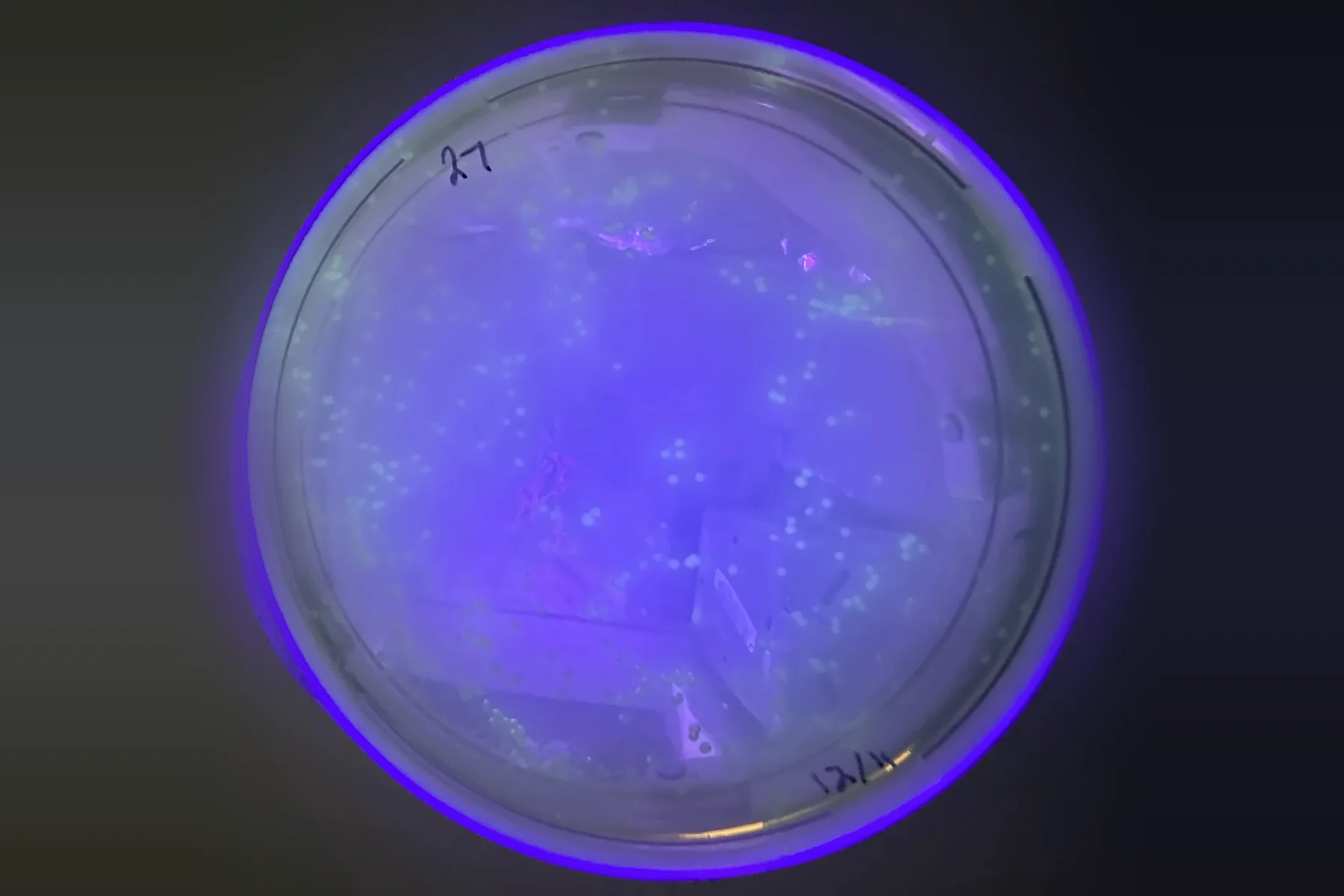
Download the pack (PDF)Pseudomonas fluorescens is a Gram-negative, rod-shaped soil bacterium named for the pigment that makes its cultures glow under ultraviolet light. It lives on plant surfaces and in the soil around roots. In agriculture it is used as a soil inoculant to improve nutrient availability in the root zone: it releases pyoverdine, a siderophore that binds iron, and organic acids that dissolve some bound phosphate. It does not form spores, so it needs cold storage and careful handling.
Pseudomonas fluorescens is a root-zone bacterium used in agriculture as a soil inoculant and biostimulant. Of the 16 fully sequenced strains in the P. fluorescens species complex at the end of 2013, all but one came from plant surfaces, roots or the soil around them [1].
This guide is written for growers and agronomists deciding whether P. fluorescens belongs in a program, and for the distributors and formulators who supply it. For the wider picture of how root-zone microbes fit together, start with the guide to how beneficial soil microbes work.
Key takeaways
- Pseudomonas fluorescens is a Gram-negative, motile, non-spore-forming soil bacterium. Environmental strains grow from about 4 to 32°C, so they can grow in cool spring soils.
- Studied strains show several traits: root colonization, iron capture with the fluorescent siderophore pyoverdine, phosphate solubilization with organic acids, the plant hormone IAA, and in some strains ACC deaminase, which limits stress ethylene.
- ABI's P. fluorescens is sold as a soil inoculant and biostimulant. It is not a registered pesticide, and ABI does not sell it to prevent or control any pest or disease.
- Field results vary. A 2018 meta-analysis of 171 studies found biofertilizers as a group raised yield 16.2 percent on average, but it placed P. fluorescens with the phosphate solubilizers, the group with the smallest response [6].
- Because it does not form spores, P. fluorescens is harder to keep alive than Bacillus. ABI's powder keeps 1 month at room temperature, 1 year refrigerated, and 2 years frozen.
- ABI produces P. fluorescens at 10 billion CFU per gram in Wisconsin. Soil rates run 100 to 250 grams per acre, which delivers 1 to 2.5 trillion CFU per acre.
Table of contents
- What is Pseudomonas fluorescens?
- Is Pseudomonas fluorescens safe, and is it a pesticide?
- How Pseudomonas fluorescens works in the root zone
- What the research shows
- Pseudomonas fluorescens vs Bacillus: which job each strain does
- Formulation, storage and shelf life
- Rates, timing and compatibility
- Where Pseudomonas fluorescens fits in a crop program
1. What is Pseudomonas fluorescens?
The glow that gives P. fluorescens its name comes from pyoverdine, a pigment the cells secrete to capture iron, covered in section 3 [1].
P. fluorescens is a Gram-negative, motile rod that is primarily aerobic and does not ferment glucose. It grows between pH 4 and 8 [1], and it does not form spores. Strains isolated from soil and plants grow between about 4 and 32°C, with an optimum of 25 to 30°C [1]. The cool-tolerant range lets it grow in early spring soils. The lack of spores makes it harder to store and ship alive, as section 6 explains.
Microbiologists treat P. fluorescens as a species complex rather than a single uniform species. Strains under the same name differ widely in what they produce and how well they colonize a given crop, and some well-known "P. fluorescens" strains have since been moved to other species. The best example is Pseudomonas protegens, a species named in 2011 for a group of fluorescent strains that produce two specific secondary metabolites, with strain CHA0 as the type strain [5]. Older papers that say P. fluorescens CHA0 are describing what is now P. protegens.
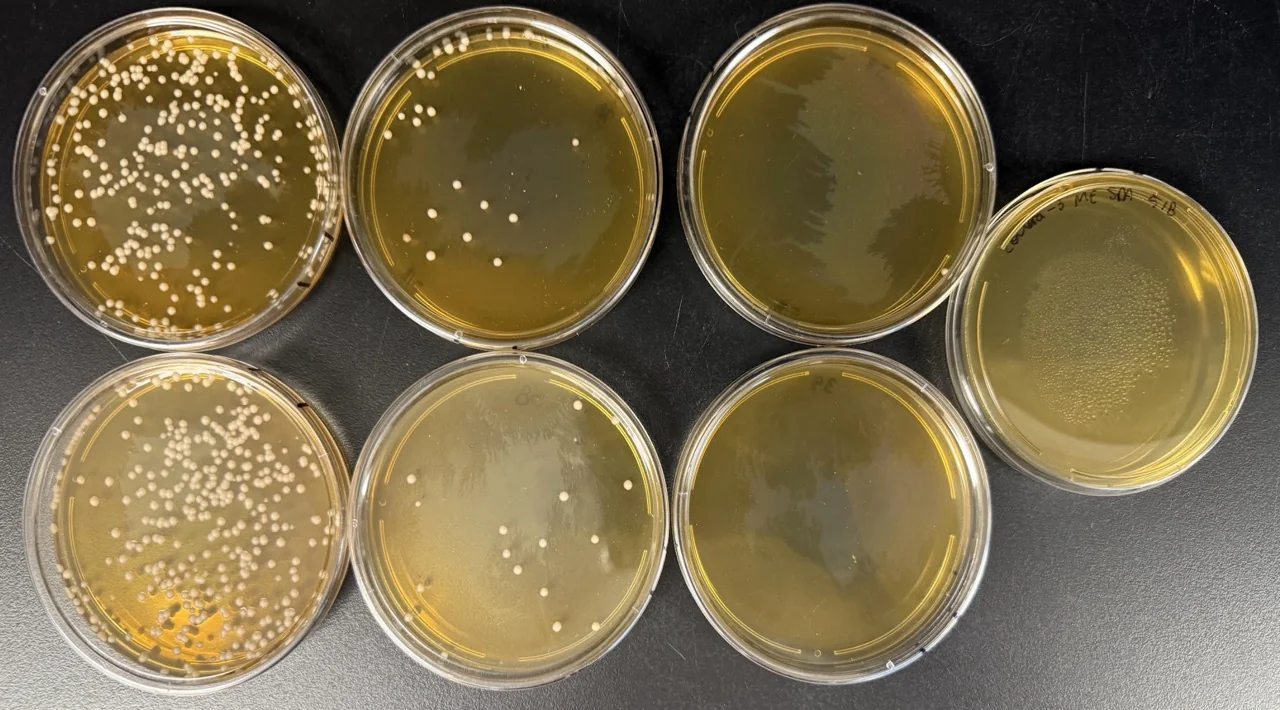
When you read the research, check the strain as well as the species. Ask any supplier, ABI included, how a strain's identity is confirmed and what data exist for it. ABI PCR-verifies the strain identity of every production lot, and its field trials test P. fluorescens as part of multi-strain blends (section 4).
2. Is Pseudomonas fluorescens safe, and is it a pesticide?
P. fluorescens is a common soil bacterium that lives on plant surfaces and in the soil around roots. Environmental strains grow best at 25 to 30°C [1]. Handle it like any dry microbial powder: wear gloves, avoid breathing the dust when mixing, wash your hands afterward, and follow the Safety Data Sheet, which ABI provides on request.
Whether a P. fluorescens product is a pesticide depends on the strain and on what the seller claims. In the United States, a microbe sold with claims to prevent or control a pest is a pesticide and must be registered with the EPA. A few specific P. fluorescens strains have been registered that way; the EPA's 2009 registration review, for example, covered strain A506 as a microbial pesticide for a specific labeled use [12]. Those registrations cover those strains and their labels only. ABI's P. fluorescens is a different product. It is sold as a soil inoculant and biostimulant, it is not a registered pesticide, and ABI does not sell it to prevent or control any pest or disease.
3. How Pseudomonas fluorescens works in the root zone
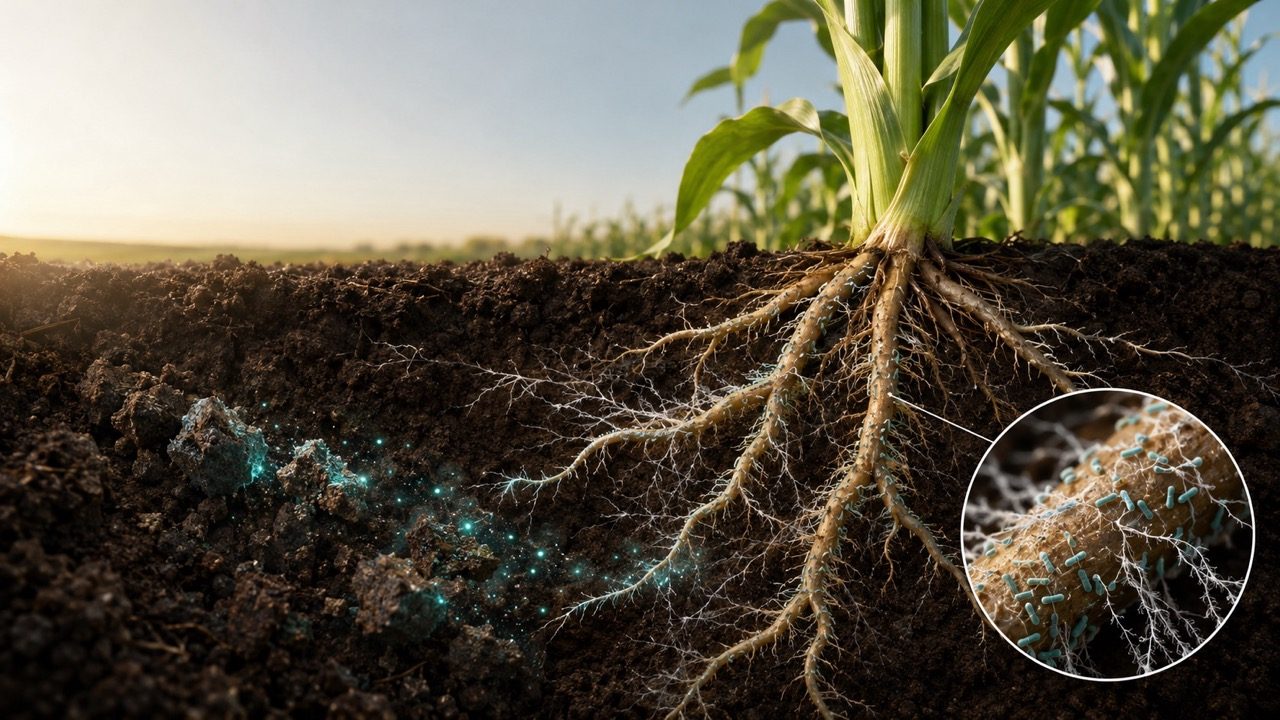
P. fluorescens works through several traits at the same time in the thin layer of soil around the root, which researchers call the rhizosphere. Strains vary in how strongly they express each trait.
Root colonization. The other traits act only where cells sit on the root. P. fluorescens is motile and forms biofilms with complex three-dimensional structure [1]. A strain applied near the seed or transplant can move toward the root, settle on its surface, and keep pace as the root grows.
Iron capture with pyoverdine. Iron is abundant in most soils and scarce in a form plants and microbes can use, especially at high pH, where it sits as insoluble oxides. P. fluorescens answers that with pyoverdine, a siderophore that binds iron with very high affinity [1]. Plants can take up some of that iron too. In one study, the iron-pyoverdine complex made by a P. fluorescens strain was taken up by Arabidopsis plants, raising iron in plant tissue and improving growth [2]. For growers on calcareous or high-pH soils, where iron chlorosis is common, this is the trait to ask about, though the evidence so far is from lab work.
Phosphate solubilization. Many soil bacteria, P. fluorescens among them, release low-molecular-weight organic acids such as gluconic and citric acid that dissolve mineral phosphate into a form roots can take up [2]. This is the same chemistry described in the guide to phosphate-solubilizing bacteria and fungi. Field results for this trait are variable. One widely cited review notes that because of variable results, the commercial use of phosphate-solubilizing bacteria has been quite limited [2]. Treat phosphorus release as a contributing benefit, not the main reason to buy this strain.
Plant hormones and ACC deaminase. Studied P. fluorescens strains produce indole-3-acetic acid (IAA), the plant hormone that drives lateral and adventitious root formation and speeds root development [2]. The response depends on the crop. An IAA-overproducing P. fluorescens mutant stimulated root development in blackcurrant cuttings but inhibited it in cherry cuttings [2]. Some strains also make ACC deaminase, an enzyme that breaks down the compound plants use to make ethylene. When a plant is stressed by drought, salt or flooding, ethylene rises and slows root growth. Bacteria with ACC deaminase on the root keep ethylene from reaching growth-inhibiting levels [2].
Plant defense signaling. In laboratory work on Arabidopsis, Pseudomonas strain WCS417r (published as P. fluorescens and since placed in P. simiae [13]) triggered a whole-plant response called induced systemic resistance, which depended on the plant's jasmonate and ethylene signaling and did not depend on salicylic acid [4]. A 2014 review describes the general effect: root-associated microbes, including Pseudomonas, Bacillus, Trichoderma and mycorrhizal species, sensitize the plant immune system for enhanced defense without directly activating costly defenses [3]. This is research on specific strains. ABI does not sell or promote its P. fluorescens for plant defense, or to prevent or control any pest or disease.
Biosurfactants and polysaccharides. Strains also secrete biosurfactants and extracellular polysaccharides. ABI's P. fluorescens product page describes the polysaccharides as helping bind soil particles into aggregates that hold moisture. Both support colonization more than they act on the plant directly.
4. What the research shows
Field results with P. fluorescens vary by strain, crop, soil and climate. The broadest data set is a 2018 meta-analysis of 171 peer-reviewed publications, which found that biofertilizers raised yield by 16.2 percent on average over uninoculated controls [6]. The response was largest in dry climates (20.0 percent) and smaller in tropical (14.9 percent), oceanic (10.0 percent) and continental climates (8.5 percent) [6]. Biofertilizers also improved nutrient use efficiency, adding on average 7.5 kilograms of yield per kilogram of phosphorus fertilizer and 5.8 kilograms of yield per kilogram of nitrogen fertilizer [6]. The same paper classes P. fluorescens with the phosphate solubilizers, the group with the smallest response at its optimum, and found that inoculants combining nitrogen fixation with phosphate solubilization outperformed either trait alone. Multi-strain products as a group, however, did no better than single-strain ones [6]. Its authors note that biofertilizer effects have often been inconsistent, which has held back adoption by farmers [6].
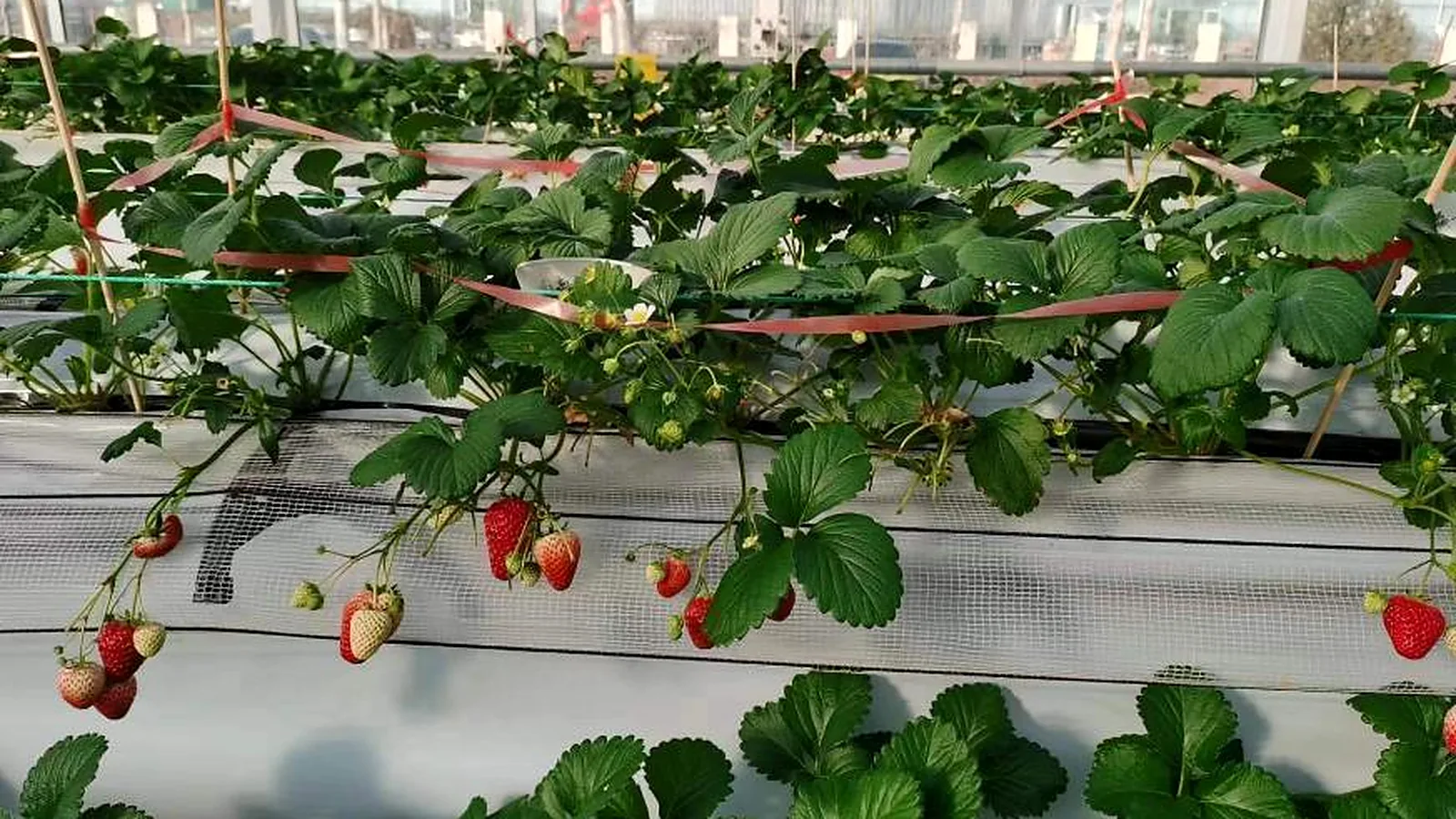
In strawberry, a four-month greenhouse study tested three Pseudomonas strains, two of them P. fluorescens, together with arbuscular mycorrhizal fungi. Every treatment that included strain Pf4 produced at least 22 percent more fruit and 14 to 20 percent more fruit weight per plant than uninoculated plants at the same phosphorus level [7]. Not every pairing helped: two other strain and fungus combinations in the same study reduced fruit weight by about 17 percent [7]. An earlier study by the same group found that mycorrhizal fungi and selected Pseudomonas strains, alone or together, raised anthocyanin concentration in strawberry fruit grown with about 70 percent of the usual nitrogen and phosphorus [8]. Anthocyanin content is a fruit-quality measure, and neither study tested ABI's strain.
In maize, six field trials in Paraná and Goiás, Brazil, between 2012 and 2016 tested seed inoculation with a commercial liquid P. fluorescens strain. Inoculated maize given 75 percent of the recommended side-dress nitrogen yielded as much as uninoculated maize given the full rate [9]. The trials had no uninoculated plot at 75 percent, so the inoculant's own share of that result cannot be separated out. The study was funded by the product's manufacturer, and two of the authors worked for it. The result fits the nitrogen-efficiency work in the guide to nitrogen use efficiency, but it tested another company's strain, not ABI's.
| Study | Setting | Result | Evidence |
|---|---|---|---|
| Meta-analysis of 171 publications [6] | Published trials of all biofertilizer types | 16.2 percent average yield gain; phosphate solubilizers, including P. fluorescens, gave the smallest response | Independent meta-analysis |
| Strawberry, strain Pf4 with mycorrhizal fungi [7] | Greenhouse, 4 months | At least 22 percent more fruit and 14 to 20 percent more fruit weight per plant; two other pairings cut fruit weight about 17 percent | Independent greenhouse study |
| Strawberry anthocyanins [8] | Greenhouse, about 70 percent of usual N and P | Higher anthocyanin concentration in fruit | Independent greenhouse study |
| Maize, a commercial liquid strain [9] | 6 field trials, Brazil, 2012 to 2016 | 75 percent of side-dress N matched uninoculated maize at the full rate | Manufacturer-funded field trials |
Results from the lab or greenhouse often do not transfer to the field, a gap that is wider for Gram-negative, non-spore-forming bacteria such as P. fluorescens [11]. And the organism has to survive formulation, storage and application to do any of this, which section 6 covers.
ABI's P. fluorescens was part of the multi-strain consortia in all of ABI's published strawberry, tomato, potato and pepper trials, summarized in the crop-by-crop guide to agricultural biologicals. Those trials tested each consortium as a whole, so the results belong to the blend rather than to P. fluorescens alone. ABI has not run a single-strain trial of its P. fluorescens. The full results are on the case studies page.
5. Pseudomonas fluorescens vs Bacillus: which job each strain does
Bacillus subtilis forms spores, and ABI's keeps 1.5 years at room temperature; P. fluorescens forms none, and ABI's keeps 1 month. In a blend, P. fluorescens adds early root colonization and iron capture, and Bacillus adds shelf life and tolerance of warm, dry conditions.
| Pseudomonas fluorescens | Bacillus subtilis | |
|---|---|---|
| Cell type | Gram-negative rod, no spores [1] | Gram-positive rod, forms resistant spores |
| Growth range | About 4 to 32°C for environmental strains [1] | Strain-dependent; spores tolerate heat and drying |
| How it acts on the root | Root colonizer; pyoverdine iron capture, phosphate solubilization, IAA, and ACC deaminase in some strains [1][2] | Root colonization and phosphate solubilization; studied strains also make siderophores and IAA |
| ABI concentration | 10 billion CFU per gram | 200 billion CFU per gram |
| ABI shelf life | 1 month at room temperature, 1 year refrigerated, 2 years frozen | 1.5 years at room temperature, 2+ years refrigerated |
| Best fit | Early-season root colonization and nutrient uptake; worth testing in cool soils and high-pH soils where iron is tied up | Long storage, warm conditions, dry formulations, multi-function blends |
The CFU difference is not a quality difference. Spore-formers like Bacillus concentrate to very high counts and survive drying; vegetative Gram-negative cells do not. The right comparison between products is delivered CFU per acre at the time of application, explained in the guide to what CFU means.
A Bacillus subtilis or Bacillus velezensis strain brings shelf stability and broad root-zone activity; P. fluorescens adds a second, non-spore-forming root colonizer with its own siderophore, pyoverdine. A phosphate strain such as Bacillus megaterium adds a dedicated phosphorus function. Many custom blends combine them, with the Pseudomonas component shipped and stored cold.
6. Formulation, storage and shelf life
ABI's P. fluorescens keeps 1 month at room temperature, 1 year refrigerated and 2 years frozen, because it cannot form the dormant spores that carry Bacillus through heat and drying. Non-spore-formers are more vulnerable to the stresses of processing and field application [11]. A review of inoculant technology describes the main difficulty with most formulation methods as keeping cells alive through drying and storage, with losses that can exceed 90 percent of the starting population, and calls this an acute problem for non-spore-forming Gram-negative bacteria [10]. Freeze-drying Pseudomonas without protective measures has been shown to cut viable cells by one to two orders of magnitude [11]. The same review contrasts Bacillus subtilis, which survived 45 days at about 22°C, with Pseudomonas putida, a close relative of P. fluorescens, which required refrigeration [10].
Store it cool, dry, out of direct sunlight, and reseal the container after each use. Environmental P. fluorescens strains can stop growing and stop showing up in plate counts at 35 to 37°C [1], so keep pails out of hot trucks and sunny sheds.
Distributors and formulators should keep P. fluorescens in the cold chain from receipt to the grower. Rotate stock first in, first out. Ask for a Certificate of Analysis with the batch's CFU count and date, and treat P. fluorescens as a refrigerated product. Count shipping and customs time against the 1-month room-temperature figure. A blend that contains P. fluorescens takes on its storage needs, so keep the whole blend cold. If you are building a private-label product around this strain, choose the formulation for survival. Research has shown P. fluorescens surviving 6 months in a liquid formulation with glycerol added to the culture medium, and far longer in specialized dry carriers [10]. Those are formulation projects, not off-the-shelf results. The custom microbial blend manufacturing guide covers that work.
7. Rates, timing and compatibility
ABI Pseudomonas fluorescens specifications:
| Spec | ABI Pseudomonas fluorescens |
|---|---|
| Species | Pseudomonas fluorescens, single strain |
| Identity | Strain identity verified by PCR |
| Concentration | 10 billion (1 x 10¹⁰) CFU per gram, dry powder; custom concentrations on request |
| Particle size | Passes a 100 mesh sieve |
| Shelf life and storage | 1 month at room temperature, 1 year refrigerated, 2 years frozen; store cool, dry and out of sunlight |
| Documents | Certificate of Analysis for every batch, technical sheet and SDS, all available on request |
| Regulatory status | Sold as a soil inoculant and biostimulant; not an EPA-registered pesticide. State registration requirements vary, so ask for your state |
The rates below come from its technical sheet.
| Method | Rate | Timing |
|---|---|---|
| Soil: drip, drench or fertigation | 100 to 250 g per acre (250 to 625 g per hectare) | At root establishment or transplanting; reapply every 2 to 4 weeks during active growth as needed |
| In-furrow | 20 to 50 g per acre (50 to 125 g per hectare) | Once, at planting |
| Foliar spray | 100 to 250 g per acre (250 to 625 g per hectare) | From vegetative or pre-flowering stages; every 7 to 14 days, especially during stress |
| Seed treatment | 10 to 15 g per kg of seed | Once, before planting; sow within 24 hours |
At the label count of 10 billion CFU per gram, a 100 gram soil application delivers 1 trillion CFU per acre and a 250 gram application delivers 2.5 trillion. The in-furrow rate of 20 to 50 grams delivers 200 to 500 billion CFU per acre, placed right at the seed where the root will grow through it.
Timing. Get the organism onto the root early. Its strengths, colonizing roots and capturing nutrients there, matter most when roots are young: at seeding, at transplanting, and in the first weeks of growth.
Mixing. Mix the powder thoroughly into enough water to reach the root zone and keep the tank agitated so cells stay in suspension. If you are mixing with fertilizer, dilute the fertilizer fully in water first, then add the microbes. Flush drip lines afterward.
Compatibility. Do not tank-mix P. fluorescens with herbicides, fungicides, bactericides or chemical pesticides. Bactericides in particular are designed to kill bacteria, and a Gram-negative non-spore-former has little protection against them. Inoculant research makes the same general point: some fungicides and insecticides applied to seed can be detrimental to an inoculant [10]. Where a seed treatment or spray program includes these products, separate the microbial application in time and place, and ask your supplier for strain-specific guidance.
Foliar use. UV light damages bacterial cells, so spray in the early morning or evening, use a non-ionic surfactant or wetting agent, and cover the undersides of leaves.
8. Where Pseudomonas fluorescens fits in a crop program
Best fit. The mechanisms suggest P. fluorescens is worth testing where early nutrient uptake is the bottleneck, such as transplants, cool spring soils, and high-pH or calcareous soils where iron is tied up. Field evidence for each is thin, and the iron result above comes from Arabidopsis, so test it against untreated strips before scaling. Strains that make ACC deaminase have been studied in crops under drought or salt stress [2]. It is a weaker choice as a stand-alone phosphorus fix: in the meta-analysis above, phosphate solubilizers gave the smallest response [6]. P. fluorescens goes in alongside the fertility program, not in place of phosphorus, iron or nitrogen fertilizer; the maize trials above still applied 75 percent of the recommended nitrogen [9].
Crop programs. P. fluorescens appears in the tomato and pepper, strawberry, and cut-flower programs in ABI's crop-by-crop guide to agricultural biologicals, with timing for each.
Partners. The strawberry research above combined Pseudomonas with mycorrhizal fungi [7]. ABI's P. fluorescens product page lists it as compatible with mycorrhizae (endomycorrhizae), Trichoderma (Trichoderma harzianum) and Bacillus species. The mycorrhizal side is covered in the mycorrhizal fungi guide. ABI specifies these combinations by function and per-strain CFU through the custom blend builder.
How to tell it worked. Leave untreated check strips. Compare stand counts, root mass at a fixed growth stage, and tissue tests for iron and phosphorus, then yield.
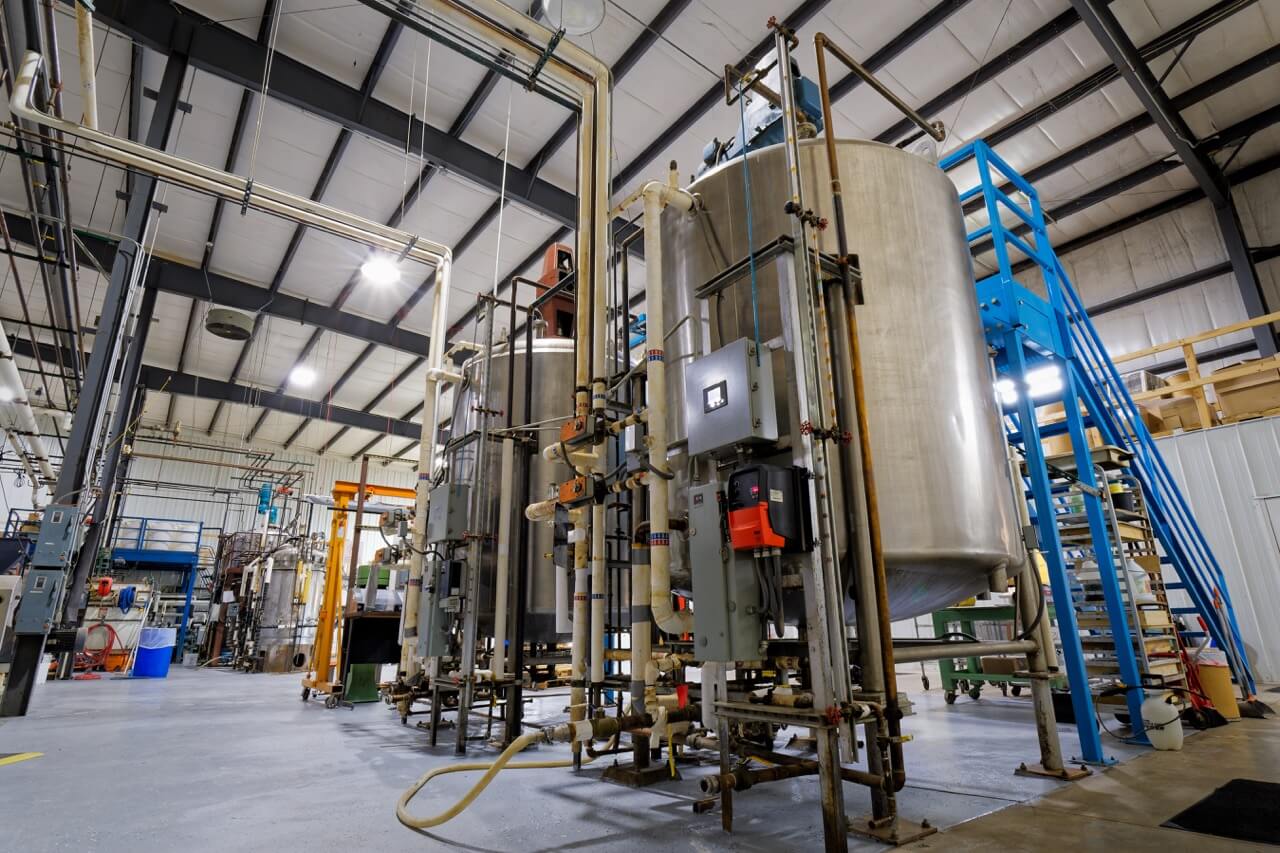
For growers and buyers: ABI manufactures Pseudomonas fluorescens at its Wisconsin facility at 10 billion CFU per gram, single-strain or blended to your specification, in pails and drums with custom packaging on request, and a Certificate of Analysis for every batch. Ask for the technical sheet and SDS with your quote. Request specs and pricing or spec a blend.
References
FAQ
What is Pseudomonas fluorescens used for in agriculture?
It is used as a soil inoculant and biostimulant to support nutrient uptake and stress tolerance in the root zone. Applied to seed, in-furrow, or through drip and drench, it colonizes young roots, captures iron with its siderophore pyoverdine and solubilizes some phosphate.
Is Pseudomonas fluorescens good for plants?
Yes, for the strains selected for agriculture. The species lives on plant surfaces and in the soil around roots. In lab work, research strains have improved iron uptake, and in a greenhouse strawberry study one strain paired with mycorrhizal fungi raised fruit number and weight, while two other pairings lowered fruit weight. Results depend on the strain, the crop and how well the organism survives handling.
Is Pseudomonas fluorescens a biopesticide?
Not as ABI sells it. A few specific P. fluorescens strains are registered with the EPA as microbial pesticides for their own labeled uses. ABI's P. fluorescens is a different product, sold as a soil inoculant and biostimulant. It is not a registered pesticide, and ABI does not sell it to prevent or control any pest or disease.
What is the difference between Pseudomonas fluorescens and Bacillus subtilis?
Bacillus subtilis forms spores, which survive heat and drying, so ABI's B. subtilis keeps 1.5 years at room temperature at 200 billion CFU per gram. P. fluorescens does not form spores, so it ships at 10 billion CFU per gram and needs cold storage. P. fluorescens adds a second root colonizer that captures iron with pyoverdine, and many blends use both.
How should Pseudomonas fluorescens be stored, and how long does it last?
Keep it cool, dry and out of sunlight, and reseal the container after each use. ABI's P. fluorescens powder keeps 1 month at room temperature, 1 year refrigerated, and 2 years in the freezer. Treat it as a refrigerated product. Heat is the main risk: keep pails out of hot trucks and sheds, and plan stock rotation around the cold chain.
How many CFU per acre does ABI's Pseudomonas fluorescens deliver?
At the label count of 10 billion CFU per gram, ABI's soil rate of 100 to 250 grams per acre (250 to 625 g/ha) delivers 1 to 2.5 trillion CFU per acre, and the in-furrow rate of 20 to 50 grams per acre delivers 200 to 500 billion. Compare products on delivered CFU per acre rather than the count per gram alone.
Can Pseudomonas fluorescens be tank-mixed with fertilizers or pesticides?
With fertilizers, yes, if the fertilizer is fully diluted in water first and the microbes go in last. Do not tank-mix it with herbicides, fungicides, bactericides or chemical pesticides; bactericides in particular kill it. Separate those applications in time and place, keep the tank agitated, and flush drip lines afterward.
Is Pseudomonas fluorescens the same as Pseudomonas protegens?
No. P. protegens was named as a separate species in 2011 for a group of fluorescent strains, including the well-studied strain CHA0, that were previously called P. fluorescens. Older research on "P. fluorescens CHA0" refers to what is now P. protegens. When comparing studies or products, check the strain, not just the species name.
Source Pseudomonas fluorescens in bulk
Single strain or blended to your spec, shipped cold, with a Certificate of Analysis for every batch.