Get the free ABI crop trial results pack
12 documented field trials, with real yield, root, and quality gains by crop. Enter your email and it is yours.
Thanks. Here's your pack:
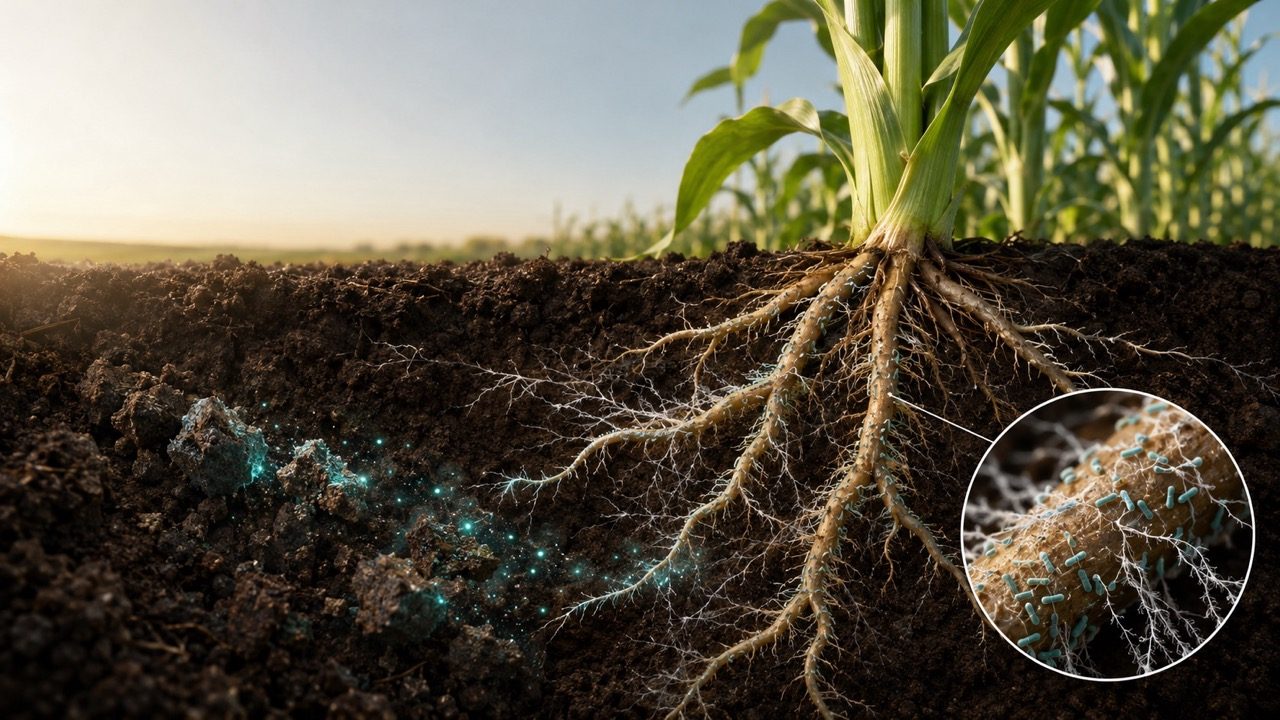
Download the pack (PDF)Agricultural biologicals are crop inputs made from living microorganisms or natural compounds, sold as biostimulants, biofertilizers, or EPA-registered biopesticides. In specialty crops, beneficial bacteria and fungi such as Bacillus, Trichoderma, Pseudomonas, and mycorrhizal fungi are applied at transplanting or planting and through drip irrigation to build roots and improve nutrient uptake, yield, and quality. The right strain depends on the crop. Blueberries, for example, are colonized by ericoid mycorrhizal fungi, not the arbuscular mycorrhizal fungi in most inoculants.
Biologicals pay for themselves most easily in specialty crops. A tomato field, a strawberry field, or a rose block returns far more per acre than a row crop, so a modest gain in marketable yield, sugar content, or transplant survival covers the cost of an inoculant. In one of our trials, a Georgia tomato grower's 20-acre treated zone yielded 36 percent more than a matched untreated zone, about $192,000 in added gross revenue. The product cost $115 per acre.
In a Stratovation Group survey of 257 U.S. specialty crop growers, 65 percent said they already use biologicals, and the most common reasons were better crop quality and higher yield [1]. Non-users said cost and doubt about whether the products work held them back [1]. Results vary by strain, crop, soil, and timing, and a product chosen for the wrong crop or applied at the wrong moment usually shows nothing.
Each crop section below covers what the microbes do in that crop, which strains to start with, when and how to apply them, and what ABI's field trials and the published research found. It is written for growers, crop advisors, and the distributors who supply both. For the biology behind all of it, start with the guide to how beneficial soil microbes work.
Key takeaways
- Agricultural biologicals fall into three groups: biostimulants, biofertilizers and microbial inoculants, and biopesticides. Only biopesticides are registered with the EPA for pest or disease control. ABI's strains are sold in the first two groups.
- In specialty crops, the application that matters most is the one at root establishment: the tray or transplant drench, the in-furrow application at planting, or the first drip set after new roots start growing.
- Match the strain to the crop's job. Trichoderma and Bacillus for transplant establishment, phosphate solubilizers where phosphorus is tied up, and arbuscular mycorrhizal fungi only for crops they colonize. Blueberries host ericoid mycorrhizal fungi instead.
- In ABI field trials, treated crops produced 41 percent more greenhouse tomatoes, 31 percent more potatoes, 71 percent more harvestable rose stems, and 25 percent more CBD in hemp than untreated controls on the same program.
- Results vary between farms and seasons. Leave an untreated strip and measure before you commit a whole operation.
- Never tank-mix live microbes with fungicides or bactericides. Most herbicides are less of a problem, but check compatibility before mixing. Keep high-phosphorus fertilizer out of mycorrhizal applications.
Table of contents
- What are agricultural biologicals?
- Why specialty crops respond to biologicals
- Crop-by-crop quick reference
- Tomatoes and peppers
- Strawberries
- Blueberries
- Potatoes
- Grapes, tree fruit, and avocado
- Hemp
- Cut flowers and potted ornamentals
- Coffee
- Fitting biologicals into your fertility and spray program
- Organic production and sourcing
1. What are agricultural biologicals?
Agricultural biologicals are crop inputs made from living microorganisms or from compounds of natural origin, such as seaweed extracts, humic substances, and plant extracts. They are usually sorted into three groups by what they do and how they are regulated [2][3].
Biostimulants improve a crop's nutrient use efficiency, abiotic stress tolerance, or quality, regardless of their own nutrient content [2]. Microbial biostimulants are living bacteria and fungi. Non-microbial biostimulants include seaweed extracts, humic and fulvic acids, and protein hydrolysates.
Biofertilizers and microbial inoculants are living microbes that increase the supply of nutrients a crop can reach. They fix nitrogen, release phosphorus and potassium from soil minerals, or extend the root system's reach into the soil. The line between a microbial biostimulant and a biofertilizer is thin, and one strain often does both jobs.
Biopesticides are products registered with the U.S. Environmental Protection Agency to control pests or diseases, including microbial pesticides built on bacteria or fungi [3]. Registration is what allows a label to make a control claim.
A Bacillus strain sold as a soil inoculant and a Bacillus strain sold as a registered biopesticide can be close relatives, but only the registered product can claim to control anything. ABI's strains are manufactured and sold as microbial soil inoculants and biofertilizers. This guide covers their effects on root growth, nutrient uptake, stress tolerance, yield, and quality.
2. Why specialty crops respond to biologicals
Tomatoes, peppers, strawberries, cut flowers, much of the hemp crop, and coffee go to the field as transplants. Transplant shock is where many plants are lost, and a root ball colonized before it leaves the tray has a head start.
Much of specialty production is drip-irrigated or fertigated. That puts the microbes in the root zone at almost no application cost and makes repeat applications every two to four weeks practical.
Brix, fruit size, grade, cannabinoid content, and stem count set the price for many specialty crops. Several of the clearest responses in our trials were quality responses: higher strawberry Brix in every harvest month, more ancho peppers in every size grade, and 25 percent more CBD in hemp.
A strain applied to a crop it does not associate with, a live product tank-mixed with a fungicide, a mycorrhizal inoculant run through high-phosphorus fertigation, or a single application expected to carry a whole season will usually show nothing. Most of the disappointing results we hear about trace back to one of those four.
3. Crop-by-crop quick reference
| Crop | What the microbes are there to do | Strains to start with | When and how | ABI field result |
|---|---|---|---|---|
| Tomato, pepper | Transplant establishment, root mass, nitrogen, phosphorus, and potassium uptake | Trichoderma harzianum or asperellum, Bacillus subtilis or velezensis, Pseudomonas fluorescens, endo mycorrhizae | Tray or transplant drench, then drip every 2 to 4 weeks to fruit set | +41% greenhouse tomato yield (Queretaro, Mexico); +39% pepper root mass and 100% vs 71% transplant survival (Arizona) |
| Strawberry | Root establishment, fruit set, Brix | Endo mycorrhizae, Pseudomonas fluorescens, Bacillus amyloliquefaciens | Plug dip or drench at planting, then drip every 2 to 4 weeks | +26% production and higher Brix in every harvest month (greenhouse, China) |
| Blueberry | Root growth and nutrient uptake in acidic soil | Trichoderma harzianum or asperellum, Aspergillus niger, Penicillium bilaiae; Bacillus megaterium toward pH 5.5; no arbuscular mycorrhizal product | Drip or drench at planting and at the spring root flush | No ABI trial yet |
| Potato | Early root growth, phosphorus uptake, tuber size and uniformity | Bacillus subtilis or amyloliquefaciens, Bacillus megaterium, endo mycorrhizae, Trichoderma | In-furrow at planting or seed-piece treatment | +31% yield, 76,275 vs 58,035 kg/ha (Shandong, China) |
| Grape, tree fruit, avocado | Establishment of new plantings, phosphorus uptake, water-stress tolerance | Endo mycorrhizae at planting; Bacillus and Trichoderma through drip | Root-ball drench at planting (0.5 to 2 g endo mycorrhizae per plant by size); drip during root flushes | No ABI trial yet |
| Hemp | Transplant establishment, flower quality | Bacillus, Trichoderma, endo mycorrhizae | Transplant drench, then drip every 2 to 4 weeks into early flower | +25% total CBD, delta-9 THC unchanged at 0.03% (South Carolina) |
| Cut flowers, orchids | Stem and bloom count, root growth in substrate | Bacillus, Trichoderma, Pseudomonas fluorescens | Root-zone drench every one to two weeks | +71% harvestable rose stems (Bogota, Colombia); +157% orchid blooms (Mexico) |
| Coffee | Seedling vigor, establishment, production | Endo mycorrhizae, Bacillus, Trichoderma | In the nursery bag, at transplanting, then a drench at the start of the rains | +5.6% production year over year (organic, Latin America) |
Every ABI result in the table compared an ABI microbial consortium with an untreated control on the same program, with only the consortium added. The results came from multi-strain consortiums built from the strains in this guide, not from any single strain. Each trial, with its rates and timing, is written up on our case studies page.
4. Tomatoes and peppers
Tomatoes and peppers go into fields, high tunnels, and greenhouses as transplants, and the first two to three weeks after transplanting set how quickly the crop establishes. The job for a microbial program is to get roots out of the plug and into the surrounding soil or substrate quickly, then keep nitrogen, phosphorus, and potassium moving into the plant through fruit set.
Strains. Trichoderma harzianum and Trichoderma asperellum colonize root surfaces and can increase root growth [4]. Bacillus subtilis and Bacillus velezensis are rhizosphere colonizers that produce plant growth regulators and help release phosphorus. In a field study on a commercial processing-tomato farm, arbuscular mycorrhizal fungi combined with Pseudomonas strains increased flower and fruit production and raised fruit sugar and vitamin content while chemical inputs were reduced [5]. ABI produces both: endo mycorrhizae and Pseudomonas fluorescens.
When and how. The tray is the cheapest place to apply. A drench on the trays before transplanting colonizes the root ball while it is small, and endo mycorrhizae can be mixed into the media at 0.25 to 1 gram per seedling. Follow with a transplant drench or the first drip set, then repeat through drip every two to four weeks until fruit set. ABI's published soil rates run from 50 to 100 grams per acre (125 to 250 g/ha) for Bacillus subtilis to 100 to 200 grams per acre (250 to 500 g/ha) for Trichoderma harzianum.
What we have measured.
- Field tomato, Georgia: a Georgia tomato grower's 20-acre treated zone yielded 36 percent more than a matched untreated zone, about $192,000 in added gross revenue, or $9,600 per acre against a product cost of $115 per acre at the distributor's 2019 price.
- Greenhouse tomato, Queretaro, Mexico: 41 percent more yield, about 660 kg more per harvest and about $572 in added gross revenue per harvest.
- Fresh-market tomato, eastern Tennessee: three weeks after an ABI consortium went on, leaf nitrogen was up 23 percent, phosphorus 123 percent, and potassium 20 percent in BeCrop lab analysis. The nitrogen side of that case is in the guide to nitrogen use efficiency.
- Pepper, Arizona, independent lab test: an ABI Trichoderma-based consortium produced 39 percent more root mass and 100 percent transplant survival against 71 percent for the control, with 18 percent more pods per plant, ahead of both the control and a competing biological.
- Ancho pepper, Guanajuato, Mexico: 21 percent more marketable yield in a commercial greenhouse, with more fruit in every size grade.
5. Strawberries
Strawberries have a short establishment window, and the price depends on flavor and shelf quality. Plug or bare-root transplants go into raised beds, often fumigated and under plastic, and the crop is fertigated through drip for the rest of the season.
Research on strawberry points at fruit quality as much as yield. In a greenhouse study, combinations of three arbuscular mycorrhizal fungi and three Pseudomonas strains increased fruit sugar and anthocyanin concentrations, and one Pseudomonas strain raised fruit number by at least 22 percent and fruit weight per plant by 14 to 20 percent [6]. A 2018-2019 University of California trial at the Shafter Research Station added four commercial biological programs to a standard drip fertility program. Total yield ran 13 to 31 percent above the standard program, but most of the differences were not statistically significant, and the researchers recommended larger plots for future work [7].
Strains and timing. Start with endo mycorrhizae and Pseudomonas fluorescens at planting, as a plug dip or a drench through the first drip set, and add Bacillus amyloliquefaciens or Bacillus subtilis through drip every two to four weeks. Pseudomonas fluorescens does not form spores, so it ships and stores refrigerated. In fumigated beds, apply only after the fumigant's plant-back interval has passed.
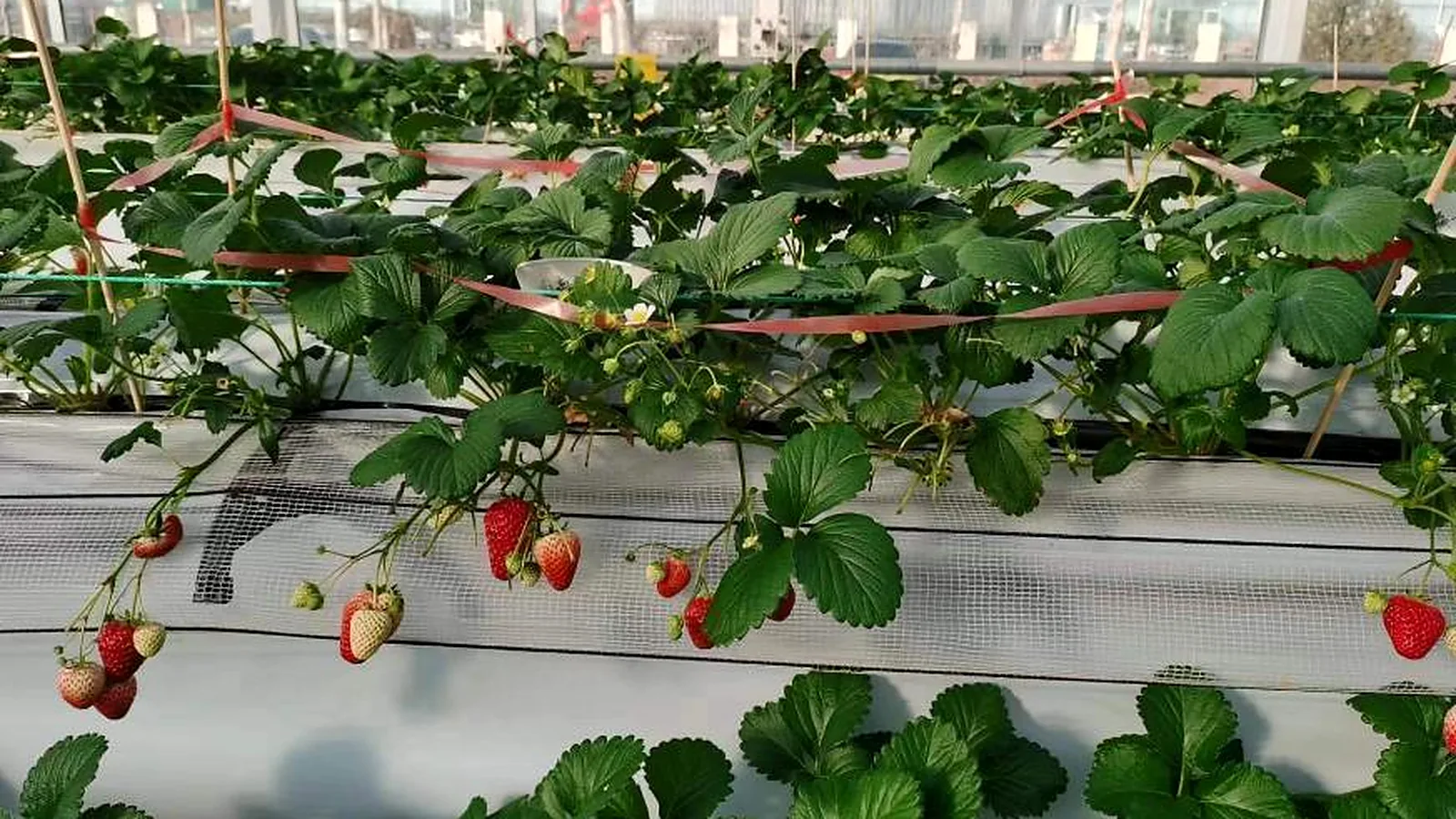
What we have measured. In a commercial greenhouse in China, the grower kept the nutrient program unchanged and added an ABI consortium. Total production rose about 26 percent over three harvest months, and fruit Brix was higher in every month: 11.22, 10.86, and 10.71 in the treated block against 10.72, 9.86, and 9.64 in the control.
6. Blueberries
Blueberries are the crop where a standard mycorrhizal product is the wrong choice. Like other members of the heath family, blueberries form ericoid mycorrhizae: the fungi colonize the hair roots intracellularly, coiling inside the outer root cells. That is a different symbiosis, with a different group of fungi, from the arbuscular mycorrhizal fungi in most commercial inoculants, including ours [8]. Their finest roots, called hair roots, have no root hairs, which is part of why the fungal partner matters [8].
Inoculating with ericoid fungi is not yet a proven field practice either. In a Mississippi trial on rabbiteye blueberries, plants colonized with ericoid fungi before transplanting showed no colonization after a year in the field, and first-year yield did not change [9].
That leaves the bacteria and the free-living fungi, which do not depend on a specific host plant, and root-zone pH decides which to use. Blueberries are grown at pH 4.5 to 5.5. Trichoderma is the best fit: Trichoderma harzianum, Trichoderma asperellum, Trichoderma koningiopsis, and Trichoderma longibrachiatum grow best in slightly acidic conditions and support root growth. Aspergillus niger handles acid easily. Penicillium bilaiae grows fine at this pH and adds phosphorus availability, but its largest gains come in high-pH, calcareous soils, so expect a smaller payoff here. Among the bacteria, Bacillus megaterium, Bacillus coagulans, and Bacillus mucilaginosus are the most acid-tolerant. Bacillus subtilis, Bacillus amyloliquefaciens, Bacillus velezensis, and Pseudomonas fluorescens survive at low pH, but their colonization and activity drop off below about pH 5.5, so they fit the upper end of the blueberry range. Run the first application through drip at planting and repeat when the spring root flush starts. We have not run a blueberry trial of our own yet.
7. Potatoes
Potatoes root shallowly and are usually fertilized heavily with phosphorus, so a microbial program in potatoes aims at early root growth and phosphorus uptake. The in-furrow band at planting puts the inoculant next to the seed piece, where the first roots form.
Strains and timing. Apply in-furrow at planting, or treat the seed pieces at 3 to 5 grams per kilogram of seed. Bacillus subtilis or amyloliquefaciens (10 to 20 grams per acre in-furrow) covers root growth, Bacillus megaterium (20 to 40 grams per acre) adds phosphate solubilization, and endo mycorrhizae at 150 grams per acre extends the root system. Keep a high-phosphorus starter out of the band with the mycorrhizal inoculant, because heavy soluble phosphorus reduces colonization [10]. For more on the phosphorus side, see the guide to phosphate-solubilizing bacteria and fungi.
Field establishment of an inoculated mycorrhizal fungus is not guaranteed. A field study that traced native and inoculated Rhizophagus irregularis in three potato cultivars found that inoculation success depends on several interacting factors [11].
What we have measured. In Shandong, China, a grower added an ABI consortium to the standard program at 48,000 plants per hectare with a matched planting date. The treated field yielded 76,275 kg/ha against 58,035 kg/ha for the control, 31 percent more, with larger and more uniform tubers.
8. Grapes, tree fruit, and avocado
In perennial crops, the most valuable application is at planting, while the root system is small and the planting hole is open. After that, time applications to each new flush of root growth rather than to a calendar date.
For grapevines, a review of arbuscular mycorrhiza in viticulture found that the fungi improve vine growth and nutrition and increase tolerance to water stress, salinity, and iron chlorosis. It also found that phosphorus fertilization reduces colonization and herbaceous cover crops favor it [10]. Inoculating vines planted in replant soil stimulated shoot growth [10].
Strains and timing. Put endo mycorrhizae in direct contact with the root ball at planting, as a slurry or drench, not broadcast. The dose scales with the size of the root system. With ABI's endo mycorrhizae at 6,000 propagules per gram, use about 0.5 gram per bare-root vine or small tree, 1 gram per tree of 1-inch caliper, and 2 grams per tree above 3-inch caliper. The simplest way to apply it is to mix 50 grams in 10 liters of water and drench 100 mL on each root ball, which treats 100 vines. In the nursery, mix 0.25 to 1 gram per plant into the media. In established vineyards and orchards, run Bacillus and Trichoderma through drip while roots are actively growing. For many orchards and vineyards that means spring and again after harvest; dig and look for white root tips to confirm. Avocado and citrus fit the same pattern. Our field trials have not covered grapes, tree fruit, or avocado yet. For a deeper look at the fungi themselves, see the guide to mycorrhizal fungi in agriculture.
9. Hemp
Floral hemp grown for CBD is a short-season crop sold on cannabinoid content, which has to stay under the federal delta-9 THC limit of 0.3 percent.
Strains and timing. Apply Bacillus, Trichoderma, and endo mycorrhizae at transplanting, then run Bacillus and Trichoderma through drip every two to four weeks into early flower.
What we have measured. A South Carolina grower added an ABI consortium to a hemp crop. Total CBD rose 25 percent and total cannabinoids 26 percent, while delta-9 THC held at 0.03 percent, a tenth of the federal limit.
10. Cut flowers and potted ornamentals
Cut roses and potted orchids grow in high-density greenhouses, often in coco coir, bark, or other substrates that start with little microbial life, and they sell by the stem or the bloom. A substrate with little native biology gives an applied strain less competition.
Floriculture also runs intensive fungicide programs. Schedule microbial drenches between fungicide applications and never put them in the same tank.
What we have measured.
- Freedom roses, Bogota, Colombia: eight-year-old plants on matched 600 m² plots, given a weekly root-zone drench for 8 weeks ahead of Valentine's Day. The treated plot produced 18,950 harvestable stems against 11,060 for the control over a 41-day harvest, 71 percent more, worth about $9,468 at $1.20 per stem.
- Orchids, Mexico: over a four-month trial, blooms per plant rose 157 percent and branches 87 percent.
11. Coffee
Coffee forms arbuscular mycorrhizal associations, though published data on the relationship are sparse [12]. For a perennial that spends its first months in a nursery bag, the nursery is the cheapest place to inoculate. Each plant needs only a small volume of substrate treated, and the root system is colonized before it reaches the field.
Strains and timing. Mix endo mycorrhizae into nursery media at 0.25 to 1 gram per seedling, add Bacillus and Trichoderma at transplanting, and drench established plantings around the drip line at the start of the rainy season.
What we have measured. On stressed organic Castilla coffee in Latin America, an ABI consortium applied alongside the grower's organic program raised production 5.6 percent year over year, with greener, more vigorous plants and denser cherry clusters.
12. Fitting biologicals into your fertility and spray program
Treat them as a living input. Dissolve the powder fully in enough water to reach the root zone, keep the tank agitated, apply as close to the roots as you can, and flush drip lines afterward.
Keep fungicides and bactericides out of the tank. They are designed to kill fungi and bacteria, so never tank-mix them with live microbes; apply them on separate days. Herbicides are usually much less harmful, but some can still reduce microbial survival, so jar-test a new mix or ask the supplier before combining them. When you mix with fertilizer, dilute the fertilizer in water first and add the microbes last.
Watch the water. Chlorinated water and high-pressure systems are hard on mycorrhizal propagules. Check residual chlorine before running an inoculant through a treated supply.
Keep phosphorus moderate where mycorrhizae are the goal. High soluble phosphorus reduces mycorrhizal colonization [10]. Do not put a mycorrhizal inoculant in the same pass as a high-phosphorus starter.
Add to the program, don't replace it. Microbes increase how much of the applied and native nutrients a crop takes up. They do not replace a fertility program, and every ABI trial in this guide kept the grower's program unchanged and added the microbes to it. The potassium-solubilizing bacteria guide covers how that works for potassium.
Store them correctly. Spore-forming Bacillus and Trichoderma products keep well dry and cool. Pseudomonas fluorescens does not form spores and keeps about a month at room temperature and about a year refrigerated.
Prove it on your own farm. Leave an untreated strip under the same program and measure what sets your price: marketable yield and grade, Brix, stem or bloom count, and tissue nutrient levels taken at the same growth stage in both strips. To compare products on what reaches the field, see the guide to what CFU means.
13. Organic production and sourcing
Microbial inoculants are widely used in certified organic production, but certifiers review the whole product, including the carrier and any additives. Several ABI formulations are OMRI Listed. For single strains and custom consortiums, we supply the documents certifiers ask for, including a Certificate of Analysis for every batch and a non-GMO statement.
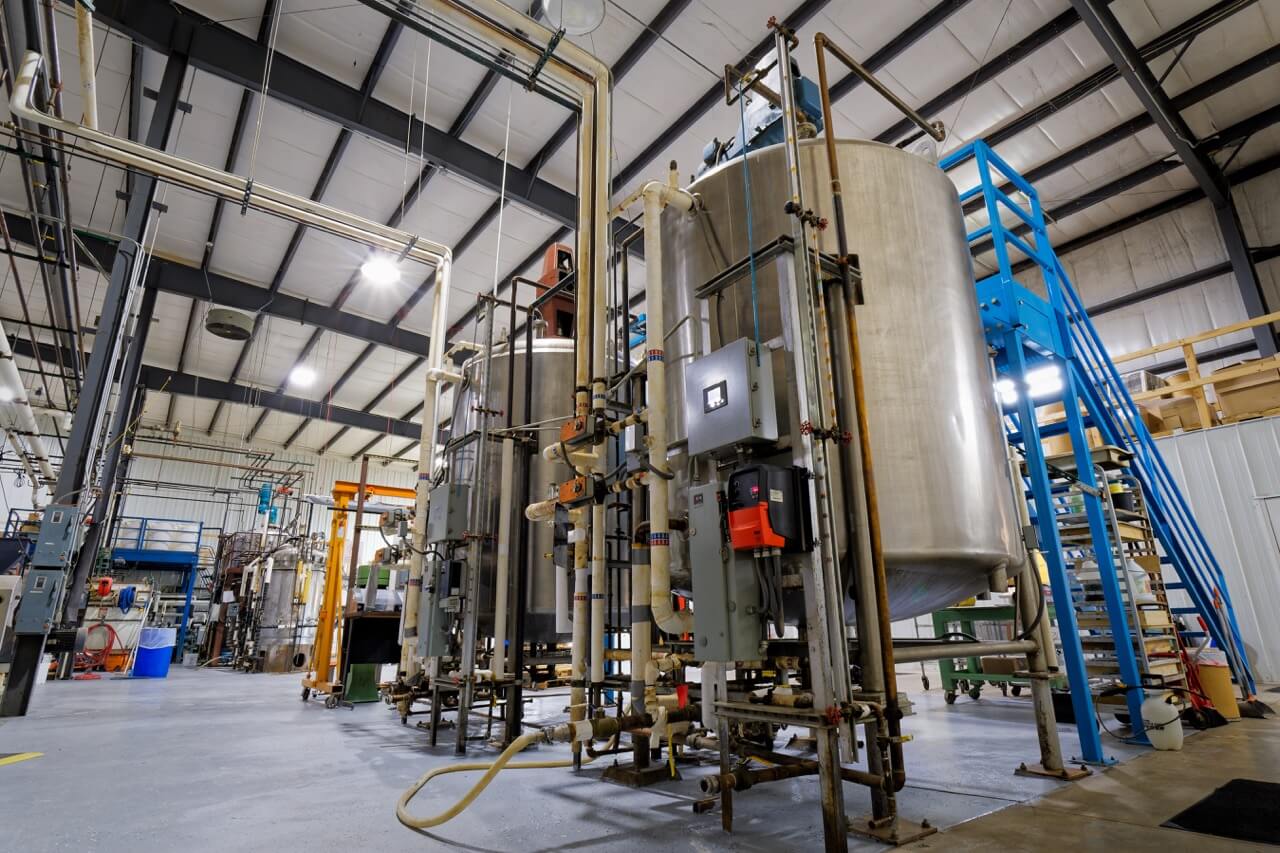
Distributors and brands that sell biologicals under their own label can source every strain in this guide as a single strain or as a consortium built for a crop and a price point. ABI manufactures all of them except the mycorrhizae at its facility in Belgium, Wisconsin, and verifies strain identity by PCR. The buyer's side of that process is covered in the custom microbial blend manufacturing guide.
For buyers: ABI manufactures the Bacillus, Pseudomonas, Trichoderma, Penicillium, and Aspergillus strains in this guide at its Wisconsin facility and supplies the endo mycorrhizae, single-strain or blended to your specification, with a Certificate of Analysis on every batch. Request specs and pricing or spec a blend.
References
FAQ
What are agricultural biologicals?
Agricultural biologicals are crop inputs made from living microorganisms or natural compounds. They fall into three groups: biostimulants, which improve growth, nutrient uptake, stress tolerance, and quality; biofertilizers and microbial inoculants, which increase the nutrients a crop can reach; and biopesticides, which are registered with the EPA to control pests or diseases.
What is the difference between a biostimulant and a biopesticide?
A biostimulant acts on the plant's growth, nutrient uptake, and stress tolerance and makes no pest or disease claim. A biopesticide is registered with the EPA for pest or disease control, and the registration is what allows that claim on the label. The same microbial genus, Bacillus for example, can appear in both kinds of product.
Which beneficial microbes are best for tomatoes and peppers?
Start with Trichoderma harzianum or Trichoderma asperellum for root establishment, Bacillus subtilis or Bacillus velezensis as rhizosphere colonizers, and endo mycorrhizae with Pseudomonas fluorescens for nutrient uptake and fruit quality. Apply in the transplant tray or at transplanting, then through drip every two to four weeks until fruit set.
Do mycorrhizal inoculants work on blueberries?
Standard mycorrhizal inoculants contain arbuscular mycorrhizal fungi, which do not colonize blueberry roots. Blueberries form ericoid mycorrhizae with a different group of fungi, and field inoculation with ericoid fungi has not been proven. For blueberries, use Trichoderma, Aspergillus niger, or Penicillium bilaiae, which grow well at pH 4.5 to 5.5. Bacillus strains survive at that pH but colonize best toward the upper end of the range.
Can microbial inoculants be applied through drip irrigation?
Yes. Drip and fertigation are the most common application routes in specialty crops. Dissolve the product fully, keep the tank agitated, inject during the irrigation set, and run clean water afterward to flush the lines. If the water is chlorinated, check the residual chlorine first, especially for mycorrhizal products.
Can I tank-mix biologicals with fungicides or fertilizer?
Not with fungicides or bactericides, which can kill live microbes; apply those on separate days. Most herbicides are much less harmful, but some can still reduce survival, so check compatibility before mixing. Fertilizer can share the tank if it is fully diluted in water before the microbes go in. Leave high-phosphorus fertilizer out of any mycorrhizal application, since heavy soluble phosphorus reduces colonization.
Are microbial inoculants allowed in certified organic production?
Yes, they are common in organic programs, but the certifier approves the finished product, carrier and additives included. An OMRI Listed product is the simplest route; otherwise ask the supplier for the documents your certifier needs. ABI supplies a Certificate of Analysis for every batch and a non-GMO statement on request.
How soon do biologicals show results?
Root and tissue-nutrient changes can show within weeks. In a Tennessee tomato trial, leaf phosphorus was up 123 percent three weeks after an ABI consortium went on. Yield and quality responses show at harvest. Compare against an untreated strip, because weather and management change results between seasons.
Build a biological program for your crop
ABI manufactures every bacterial and fungal strain in this guide at its Wisconsin facility and supplies the endo mycorrhizae, as single strains or a consortium built for your crop, with a Certificate of Analysis on every batch.