Get the free ABI crop trial results pack
13 documented crop trials, with real yield, root, and quality gains by crop. Enter your email and it is yours.
Thanks. Here's your pack:
Download the pack (PDF)Sourcing a private-label microbial inoculant means choosing a manufacturer, agreeing a specification (strains, CFU per gram, carrier, packaging, label), testing samples, and then ordering on a schedule. Pick a company that runs its own fermentation and gives you a Certificate of Analysis for every batch. Settle the claims on your label, brochures and website before you print anything, because they largely decide whether the product is regulated as a soil amendment or biostimulant, or as a pesticide.
If you sell fertilizer, seed or crop inputs and want a microbial product under your own name, you need a manufacturer that will make it to your specification. At ABI, a blend built from the existing strain library is typically ready to ship in 15 business days or less from order confirmation, and a custom blend order starts at $1,000. The same applies whether you buy microbial inoculants in bulk or wholesale for a private-label biofertilizer or biostimulant line.
For a distributor or brand owner, most of the work comes before the first order: vetting the microbial inoculant manufacturer, collecting its documents, settling the label claims and agreeing the supply terms. The design side (strains, CFU, carrier and format) is in the custom microbial blend manufacturing guide.
Key takeaways
- ABI manufactures its strains in-house in Wisconsin and keeps 24 production-ready bacterial and fungal strains.
- ABI PCR-verifies the strain identity of every production lot, and a Certificate of Analysis for every batch is available on request.
- In the United States, a pest or disease claim makes the product a pesticide under FIFRA, and a plant-regulator claim can too. ABI's strains are not registered pesticides, and ABI does not sell them to prevent or control any pest or disease.
- Before a label run, agree a test method with the manufacturer, run a plate count on a sample at an independent lab, and put out paired untreated check strips in the field.
- Agree storage and shelf life before you size your first order. A spore-forming Bacillus keeps far longer at room temperature than a non-spore-former such as Pseudomonas.
- At ABI, custom blends from the existing library start at $1,000 per order ($2,000 with special distributor packaging and labeling) and are typically ready to ship in 15 business days or less.
Table of contents
- What sourcing a private-label inoculant involves
- How to vet a microbial inoculant manufacturer (vs. a reseller)
- Documents to ask for before you buy
- Label claims and EPA biostimulant rules decide your registration path
- Samples, testing and the first order
- Supply terms to settle up front
1. What sourcing a private-label inoculant involves
Under a private label, sometimes called microbial contract manufacturing, you own the brand, the label and the customer, and the manufacturer owns the fermentation, quality control and batch records.
The first decision is how much you want to specify. Buying a single strain from a catalog is fastest and needs the least paperwork. A custom blend lets you target a function or a market, at the cost of more decisions about strain count and CFU per strain.
| Route | What you specify | Best fit |
|---|---|---|
| Single catalog strain under your label | Strain, CFU per gram, package, label | Testing a market, or a crop program built around one organism |
| Custom blend from the manufacturer's strain library | Strains, per-strain CFU, carrier, package, label | A branded line for a target function or region |
| New or proprietary strain | Everything, plus strain development | Large input companies with a long runway |
This table shows how ABI divides the work on a private-label deal, as described in the custom microbial blend manufacturing guide.
| Task | Brand owner | Manufacturer |
|---|---|---|
| Brand, label design and claims | Yes | Labels the product under your brand on request |
| Finished-product registration and market authorization | Yes | Supplies manufacturer-side documents |
| Organic certification of the finished product | Yes | Supplies strain, carrier and manufacturing documents |
| Fermentation, drying, blending and packaging | Yes | |
| CFU testing, identity testing and batch records | Yes | |
| Certificate of Analysis, SDS, country-of-origin certificate | Yes |
2. How to vet a microbial inoculant manufacturer (vs. a reseller)
A manufacturer can show you its fermentation, drying and testing, and it keeps batch records you can trace back. A distributor that relabels finished product can be a good partner, but you are one step further from the batch data, so ask for the manufacturer's Certificate of Analysis either way.
A 2013 review of biofertilizer formulation and quality found that many products available worldwide were often of very poor quality, which had cost them the confidence of farmers, and called for better quality control systems [1]. Once the product carries your label, customers bring quality complaints to you, not to the manufacturer.
Ask each candidate supplier these questions.
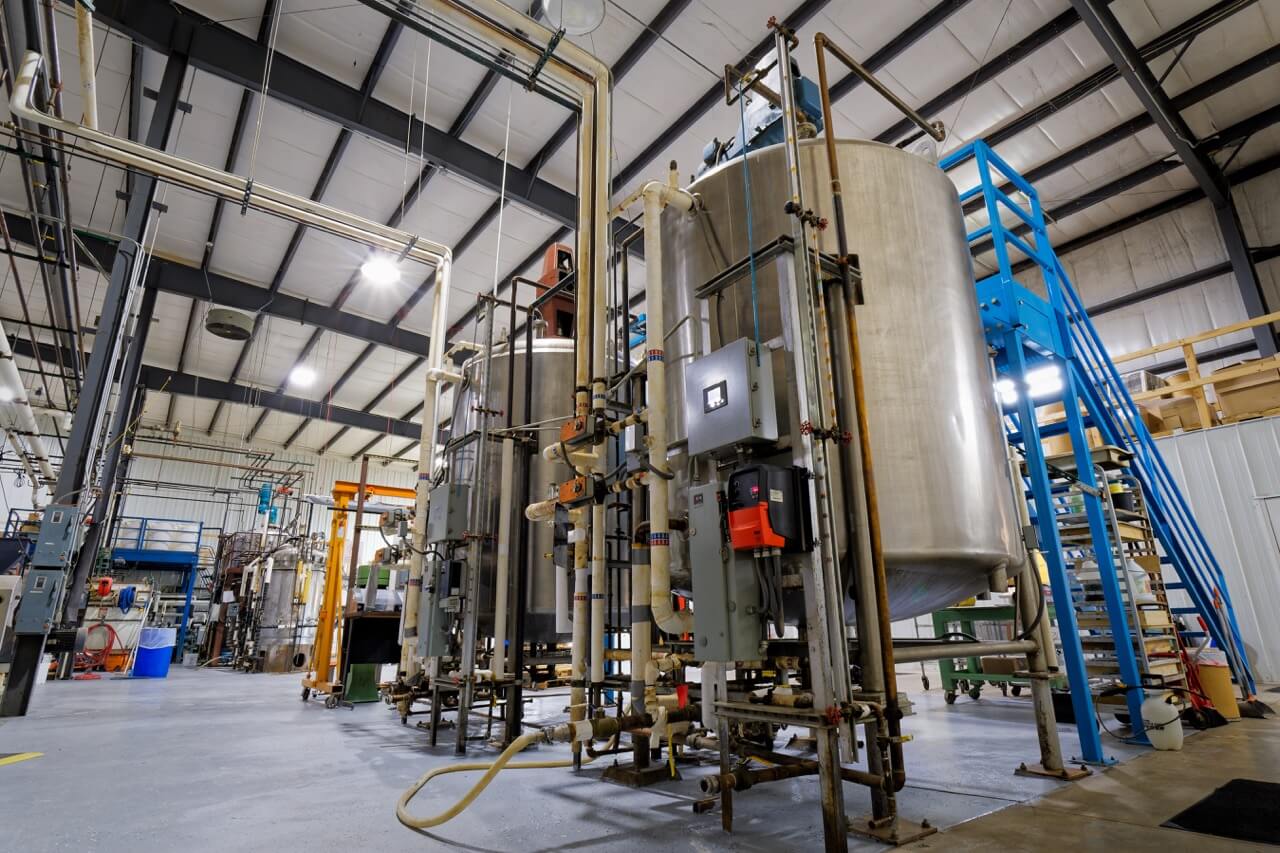
- Where is each strain fermented and dried? Ask for the site, and ask which products the company makes itself. ABI manufactures its strains in-house in Wisconsin.
- How is strain identity confirmed, and how often? ABI PCR-verifies the strain identity of every production lot.
- What CFU count is guaranteed, and when? At manufacture, at sale, or through the shelf life. The guide to what CFU means covers how viable counts fall in storage.
- Can you see a recent Certificate of Analysis? A manufacturer running batch QC can send one with the quote.
- How many strains are production-ready? A library of characterized strains is what makes short lead times possible. ABI keeps 24 production-ready bacterial and fungal strains.
3. Documents to ask for before you buy
Ask for the documents with the quote, not after the order. Each one answers a question your customers, your regulator or your customs broker will ask you later.
| Document | What it tells you | Who asks for it |
|---|---|---|
| Certificate of Analysis (per batch) | CFU per gram for that batch, against the specification | You, your customers, import regulators |
| Technical sheet | Species, CFU, particle size, rates, packaging, shelf life and storage | Your sales team and agronomists |
| Safety Data Sheet (SDS) | Handling, storage and transport | Warehouses, carriers, customers |
| Country-of-origin certificate | Where the product was made | Customs and some buyers |
| Strain identity record | How identity is verified for each lot | Your quality file, registrations |
| Manufacturer-side registration documents | Data the destination regulator requires from the producer | Import registrations |
ABI provides a Certificate of Analysis for every batch, available on request, with strain identity verified by PCR. For export, ABI supplies CoAs, SDSs, country-of-origin certificates, source-strain manufacturing information and the manufacturer-side technical documents that regulators such as SENASICA (Mexico), SENASA (Argentina), ICA (Colombia) and SAG (Chile) ask of the producer. Local trials and the registration dossier stay with the brand owner.
Check storage and shelf life on each technical sheet, strain by strain. Bacillus subtilis forms spores, and ABI's technical sheet gives 1.5 years at room temperature and 2 years or more refrigerated, stored as directed. Pseudomonas fluorescens forms none, and ABI's page gives 1 month in a cool, dry place, 1 year refrigerated and 2 years frozen at -20 °C (-4 °F). A blend takes on the storage needs of its most fragile strain, so plan your warehouse and transit around it. The Pseudomonas fluorescens guide covers that cold chain.
4. Label claims and EPA biostimulant rules decide your registration path
Regulators read the label, the brochure and the website together, and the claims across all three largely decide how the product is regulated. Write the claims before you design the pail.
United States. A product sold with claims to prevent or control a pest or disease is a pesticide under FIFRA and must be registered with the EPA. Plant-regulator claims can trigger the same requirement. EPA's 2020 updated draft guidance lists "enhances/promotes crop/fruit/produce color/development/quality/shape" and "inhibits/promotes sprouting" among claims it treats as plant-regulator claims, and "supports nutrient uptake" and "improves soil/seed nutrient conditions for root growth" among claims it does not [2]. EPA had not finalized that guidance as of November 2025 [3]. The Plant Biostimulant Act was introduced in both chambers of Congress in 2025, and in September 2026 the Senate Agriculture Committee advanced a farm bill carrying its language, which would create a federal definition and registration pathway for biostimulants [6]. Under EPA's draft guidance, a product claiming to be a "root/shoot stimulator" would generally need pesticide registration [3]. Several states also require their own registration for fertilizer and soil-amendment products; California's CDFA registration is the best known.
ABI sells its strains as soil inoculants and biostimulants. They are not registered pesticides, and ABI does not sell them to prevent or control any pest or disease. A product that carries a pest or disease claim needs EPA registration before it is sold.
European Union. Under Regulation (EU) 2019/1009, a CE-marked microbial biostimulant can contain only micro-organisms from the CMC 7 list: Azotobacter spp., mycorrhizal fungi, Rhizobium spp. and Azospirillum spp., with no processing other than drying or freeze-drying [4]. A Bacillus product does not fit that route today. The Commission has commissioned a study to add organisms to the list, and trade press reported in October 2025 that the first additions could come in 2027 [5]. Until then, products outside the list go through national rules, so check with a regulatory consultant in the target country.
Latin America and Asia. Each country runs its own registration and import process. In ABI's private-label work, the buyer leads the finished-product registration with the local regulator, and the manufacturer supplies its documents.
| Market | What decides the path | Who leads |
|---|---|---|
| United States, federal | Pest, disease or plant-regulator claims can mean FIFRA registration | Whoever registers the product with EPA |
| United States, states | State fertilizer and soil-amendment registration, where required | Brand owner |
| European Union | CMC 7 list for CE-marked microbial biostimulants; otherwise national rules | Brand owner, with a local consultant |
| Latin America, Asia | Country registration and import documents | Brand owner, with manufacturer documents |
This section is general information for planning, not legal or regulatory advice. Confirm the path for your product and market with a regulatory specialist.
5. Samples, testing and the first order
Test a sample before you commit to a label run. A sample tells you whether the product matches its specification and handles the way your customers will use it.
What to test. Send part of the sample to an independent microbiology lab for a plate count and compare it with the Certificate of Analysis. Plate counts vary between labs and methods, so agree the test method and an acceptable tolerance with the manufacturer before you test. For spore-formers such as Bacillus, ask the lab for a heat-treated spore count. Mix the powder into water the way your customers will and check that it disperses and passes through their nozzles and drip lines. For field use, put out three or four paired treated and untreated strips in the same field and compare stand counts, root mass at a fixed growth stage, and yield.
The first order. ABI's minimum for a custom blend is $1,000, or $2,000 for blends that need special distributor packaging and labeling. Blends built from the existing strain library are typically ready to ship in 15 business days or less from order confirmation. International orders add transit and customs time: ocean freight from Wisconsin to Mexico typically takes another 2 to 3 weeks, and to South America 4 to 6 weeks plus clearance. Ocean freight to Europe typically takes 3 to 5 weeks, and to Asia 4 to 6 weeks, plus clearance. Because most ABI blends are highly concentrated, an order is often small and light enough to ship by air, which typically arrives within about a week including customs clearance. Air freight costs more per kilogram but takes weeks off the transit time. Count transit time against shelf life, especially for any blend that contains Pseudomonas, where air freight is often the better choice.
| Step | Typical time at ABI |
|---|---|
| Reply to an inquiry | 1 to 2 business days |
| Specification and quote | After strains and format are agreed |
| Production, blend from existing library | Typically 15 business days or less |
| Ocean freight to Mexico | About 2 to 3 more weeks |
| Ocean freight to South America | About 4 to 6 more weeks, plus clearance |
| Ocean freight to Europe | About 3 to 5 more weeks, plus clearance |
| Ocean freight to Asia | About 4 to 6 more weeks, plus clearance |
| Air freight, any region | About 3 to 7 more days, including clearance |
6. Supply terms to settle up front
Agree these terms in writing before the first batch ships.
- The specification. CFU per gram for each strain in a blend, not only the total. The custom blend guide explains why adding strains divides each gram further.
- The guarantee point. Whether the CFU count is guaranteed at manufacture, at sale or through the stated shelf life, and under which storage conditions.
- Exclusivity. At ABI, exclusivity is negotiated case by case. For most blends and markets, ABI supplies several buyers in parallel unless exclusivity is agreed in writing; unique strain combinations or geographic exclusivity can be arranged separately.
- Labels. Who approves the label artwork and the claims on it. At ABI the claims and finished-product registration stay with the brand owner.
- Organic status. ABI's strains and standard maltodextrin carrier are generally compatible with NOP and OMRI standards, but certifying the finished product is the brand owner's job.
- Forecasts and reorders. A forecast lets the manufacturer schedule production and keeps your stock fresh. ABI's volume-tiered pricing applies to committed multi-batch supply.
How to tell the supplier is working. Keep a simple record for each batch: the CoA count, your own lab's count on a retained sample, the ship date against the promised date, and any customer complaints.
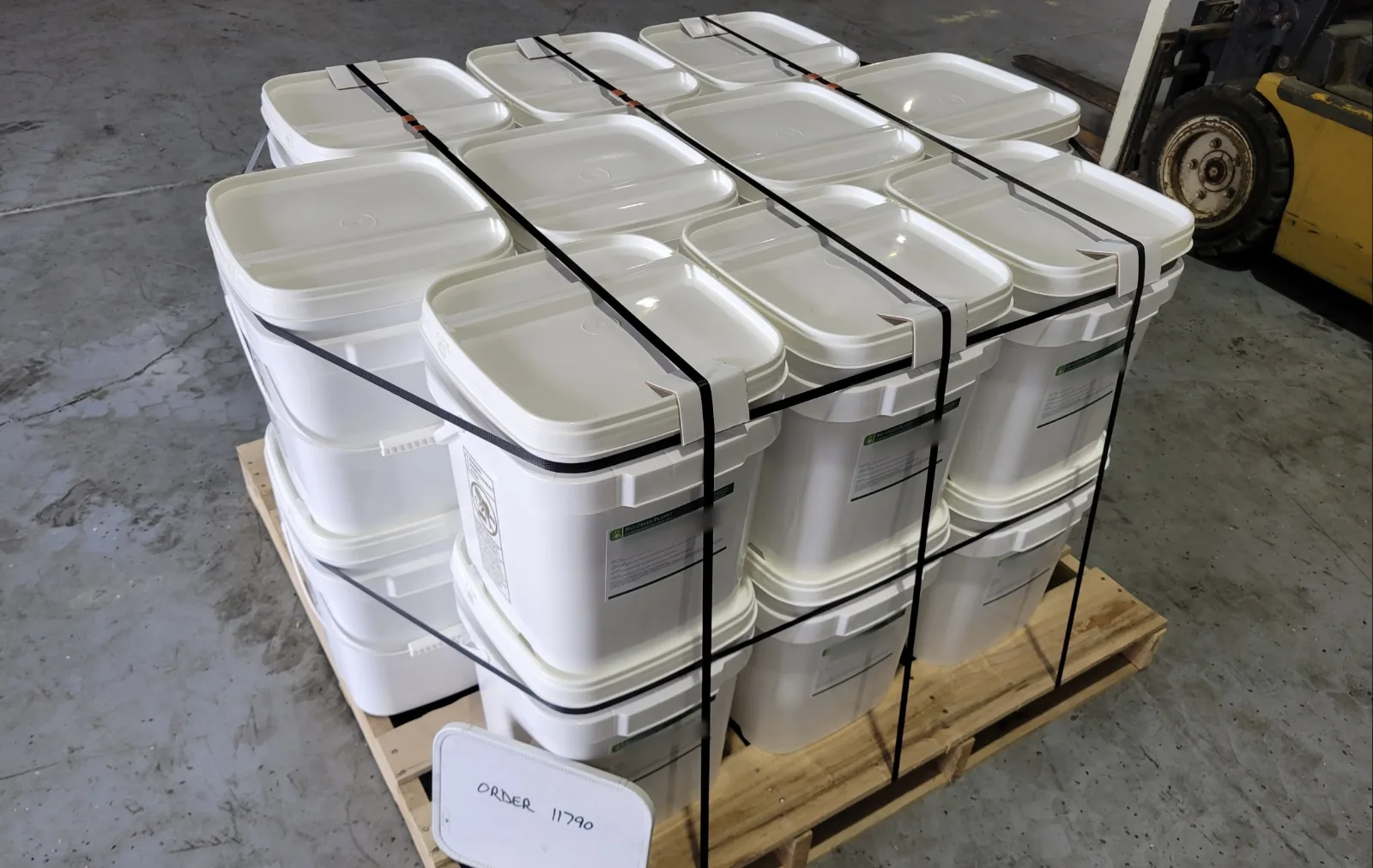
For distributors and brand owners: ABI manufactures single-strain inoculants and custom blends in Wisconsin under your label or ours, in pails and drums with custom packaging on request. Every production lot is PCR-verified for strain identity, and every batch has a Certificate of Analysis, available on request, with SDSs and export documents. Request specs and pricing or spec a blend.
References
FAQ
How can I tell a microbial inoculant manufacturer from a reseller?
Ask where each strain is fermented and dried, and ask to see a recent Certificate of Analysis and how strain identity is verified for each lot. A manufacturer keeps batch records it can trace. A distributor that relabels product can still be a good partner, but ask for the manufacturer's batch documents either way.
How do I test a sample before ordering a private-label product?
Agree the test method and tolerance with the manufacturer first, then send part of the sample to an independent lab for a plate count and compare it with the Certificate of Analysis. Mix the powder into water as your customers will and check that it passes through nozzles and drip lines.
What documents should a microbial inoculant supplier provide?
At minimum, a Certificate of Analysis for every batch with its CFU count, a technical sheet with shelf life and storage, a Safety Data Sheet, and a record of how strain identity is verified. Exporters also need a country-of-origin certificate and the manufacturer-side documents the destination regulator asks of the producer.
Do I need to register a private-label biostimulant or biofertilizer?
Often, yes, and the claims on the label, brochures and website largely decide which registration. In the United States, a pest or disease claim makes the product a pesticide that needs EPA registration, and a plant-regulator claim can too; and many states register fertilizers and soil amendments. ABI's strains are not registered pesticides, and ABI does not sell them to prevent or control any pest or disease.
Can I use a Bacillus inoculant in a CE-marked EU biostimulant?
Not under the current EU fertilising products regulation. Its CMC 7 list allows only Azotobacter, mycorrhizal fungi, Rhizobium and Azospirillum in CE-marked microbial biostimulants. The European Commission is studying additions, which trade press reported could come in 2027. Until then, other organisms go through national rules in each country.
Can I buy microbial inoculants in bulk or wholesale for a private label?
Yes. ABI supplies single strains and custom blends in bulk, packed in pails and drums under your label or ours. A custom blend order starts at $1,000, or $2,000 with special distributor packaging and labeling, and blends from the existing strain library are typically ready to ship in 15 business days or less. Volume-tiered pricing applies to committed multi-batch supply.
What should a private-label supply agreement cover?
The CFU per gram for each strain, the point at which that count is guaranteed and the storage conditions it depends on, who approves the label and its claims, who leads registration, exclusivity, and the forecast and reorder schedule. Minimums and lead times for ABI blends are in the custom microbial blend manufacturing guide.
How do I check that a supplier's product matches the label over time?
Keep a record for each batch: the Certificate of Analysis count, your own lab's count on a retained sample, the ship date against the promised date, and any customer complaints. In the field, compare three or four paired treated and untreated strips on stand counts, root mass and yield.
Source your private-label inoculant line
Tell us your market, strains and volume. We reply within one to two business days to talk through specs, samples and pricing.